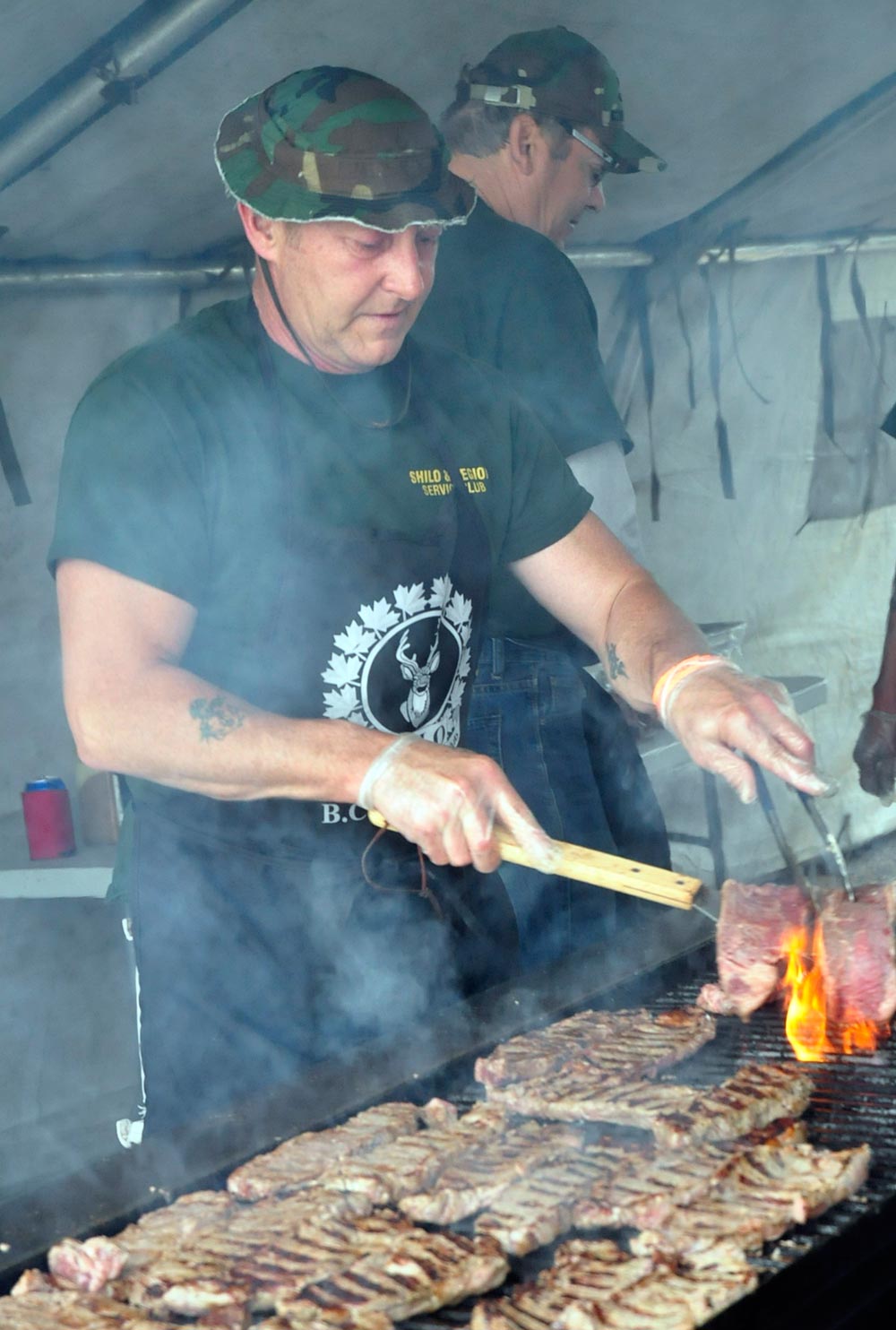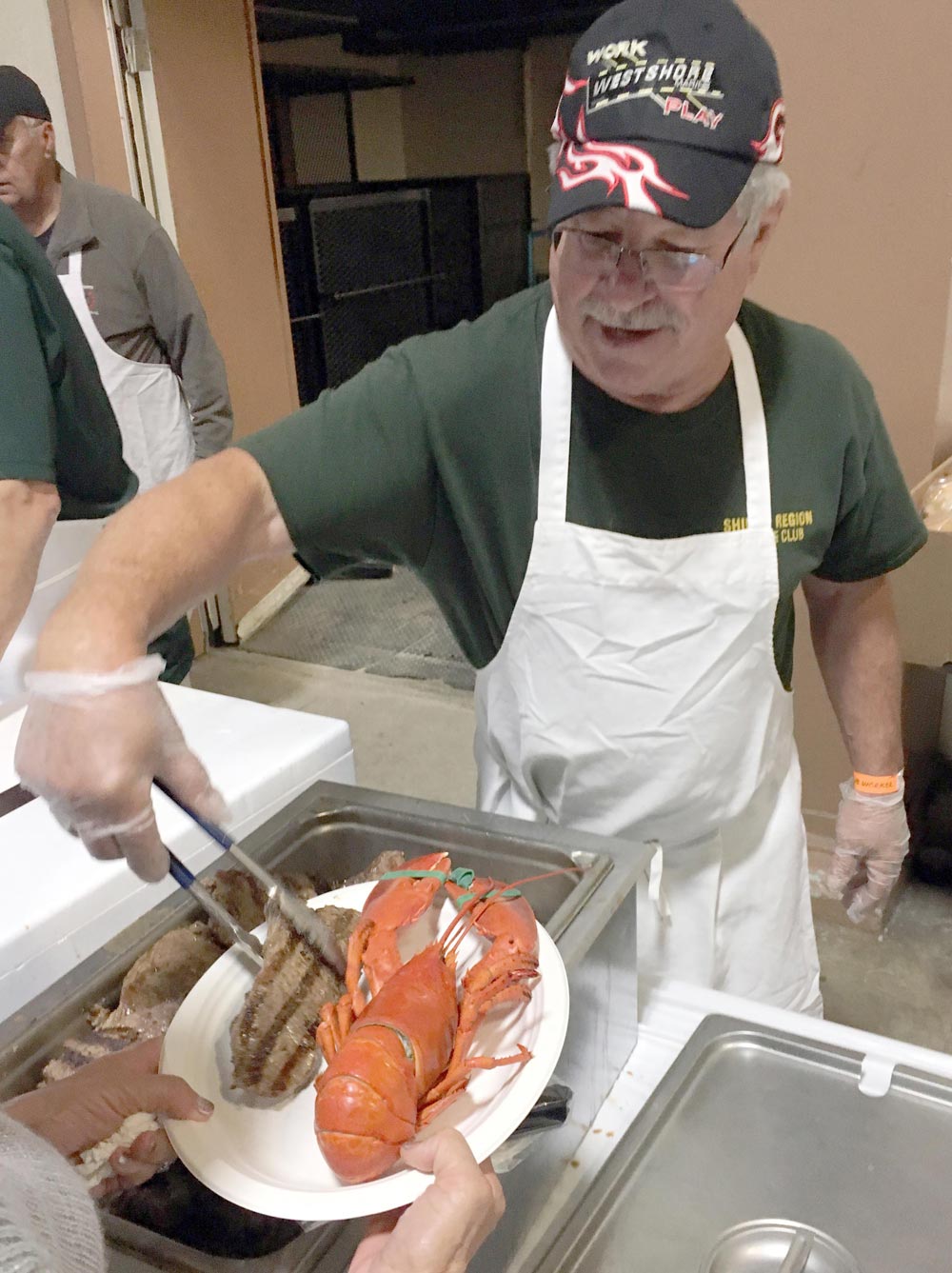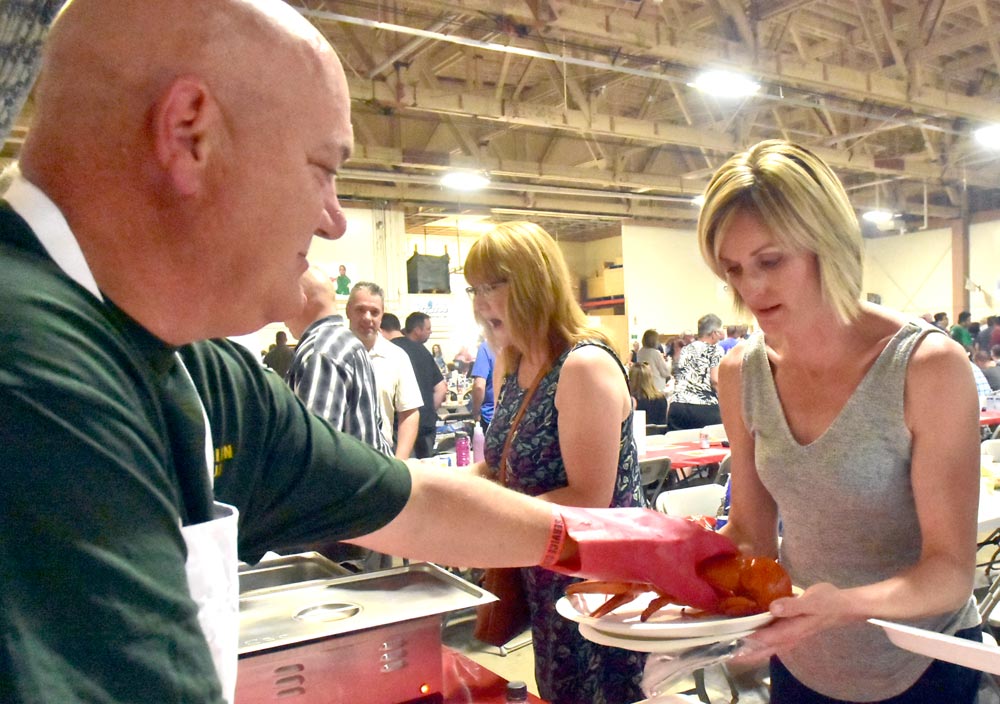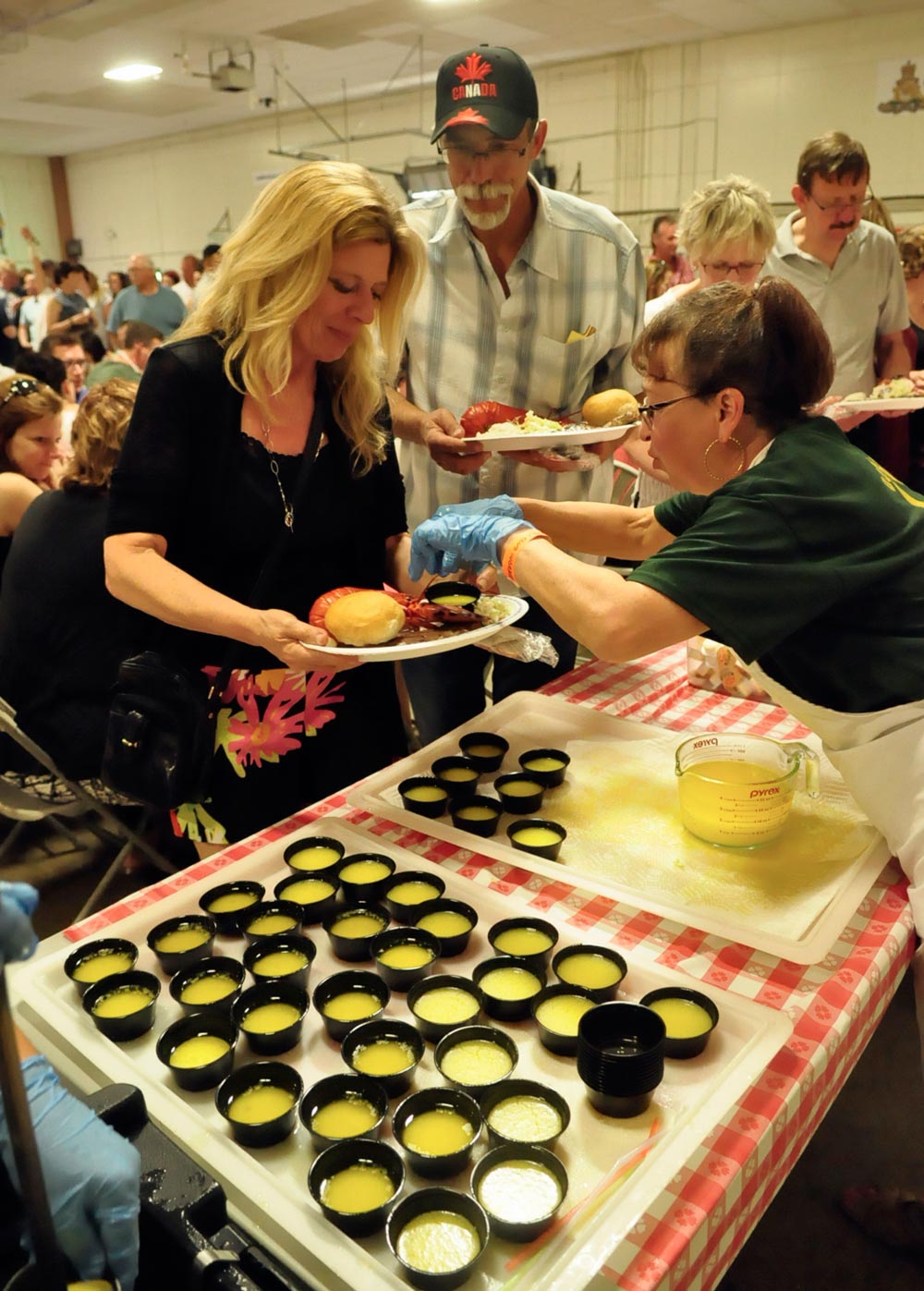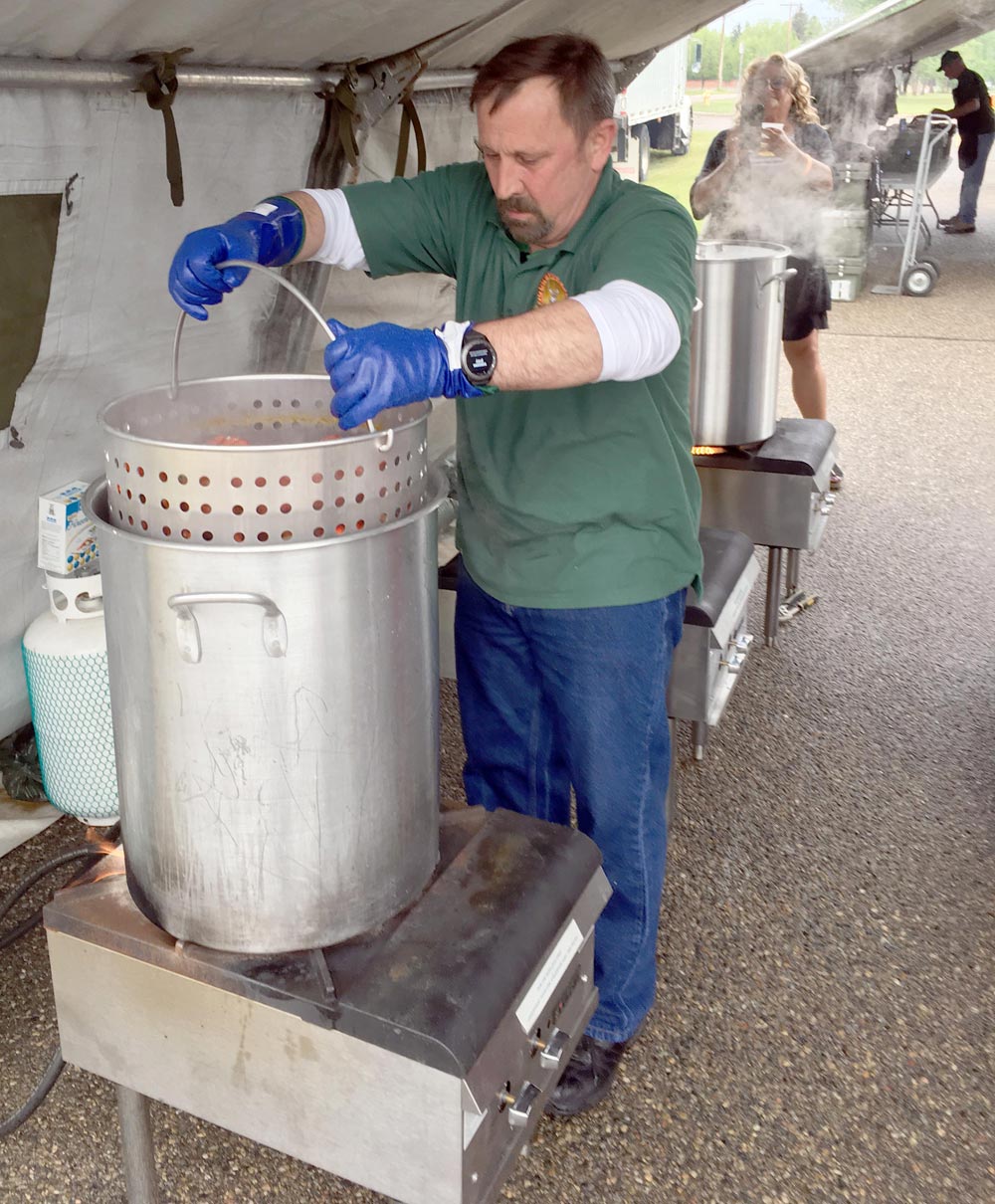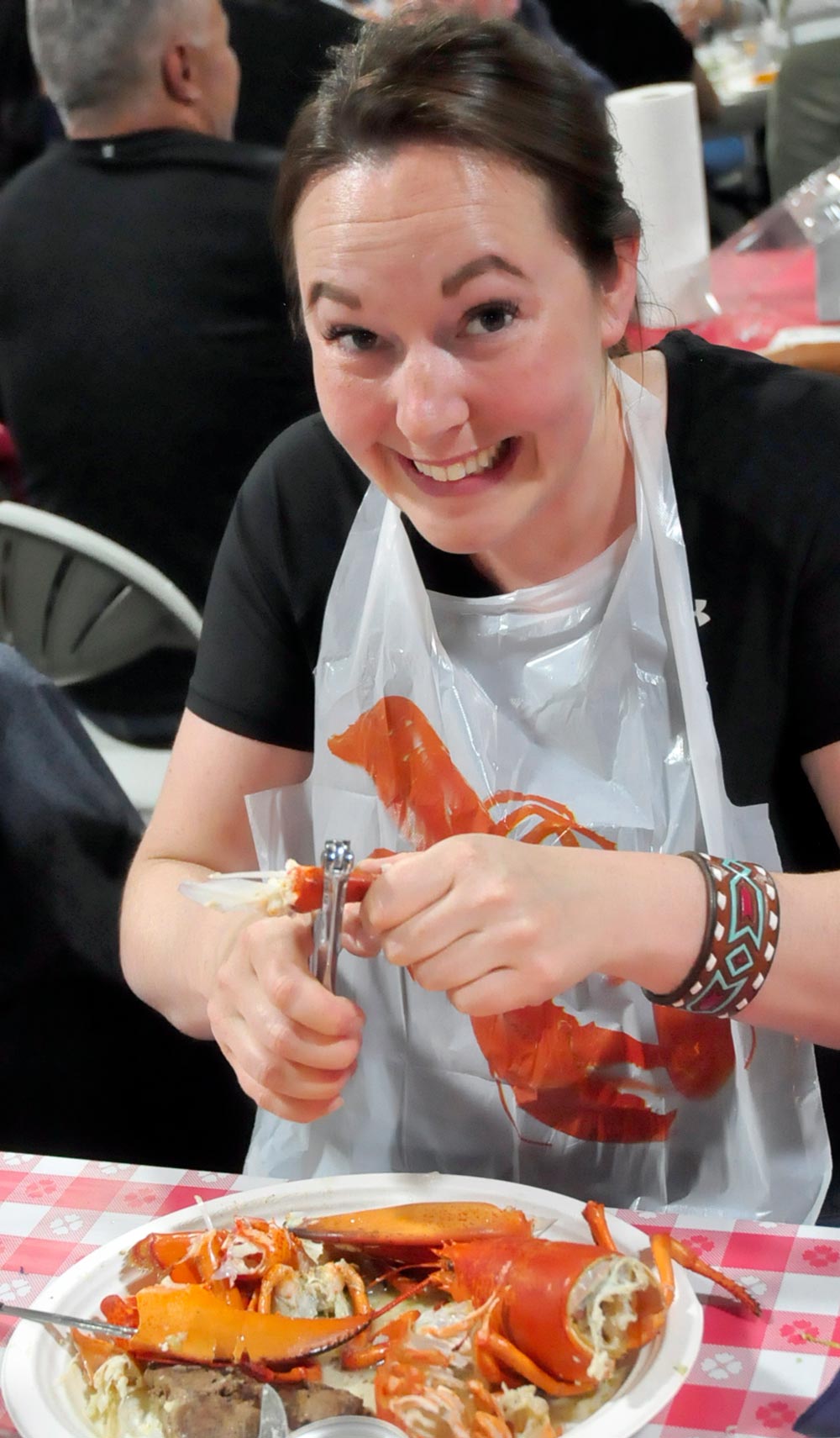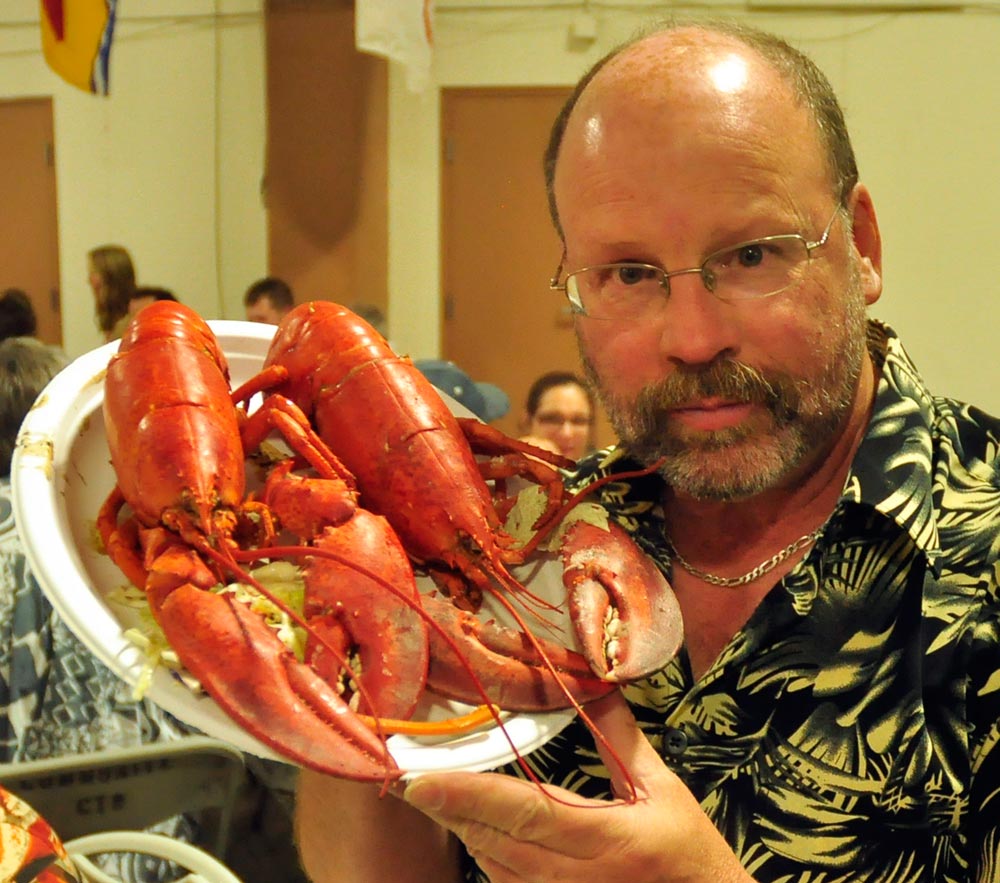

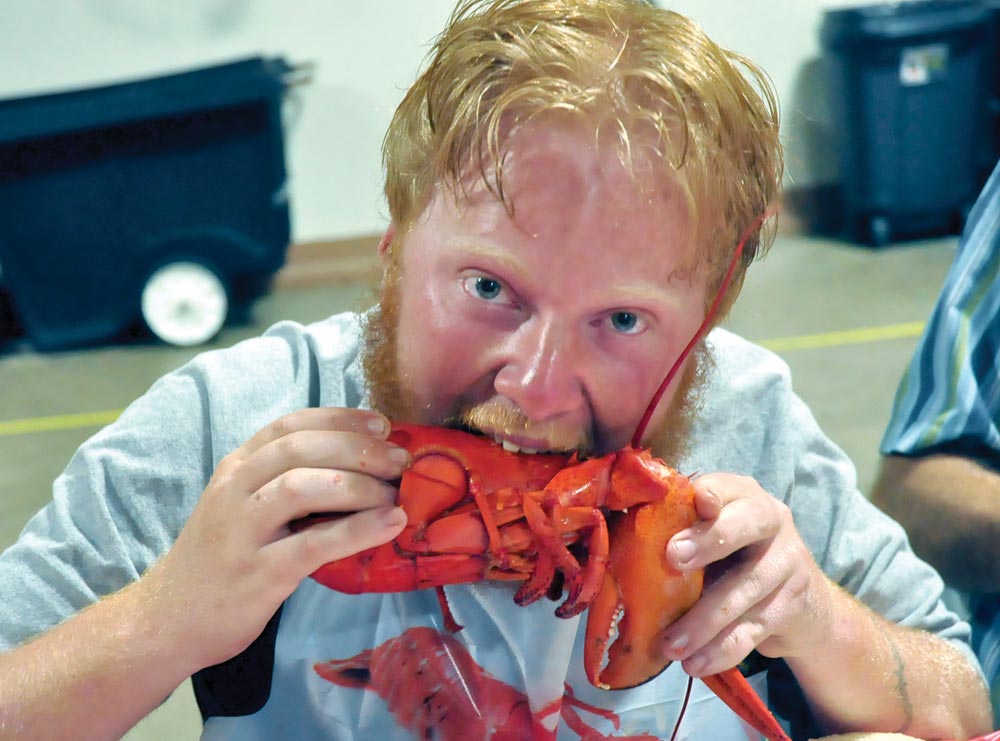
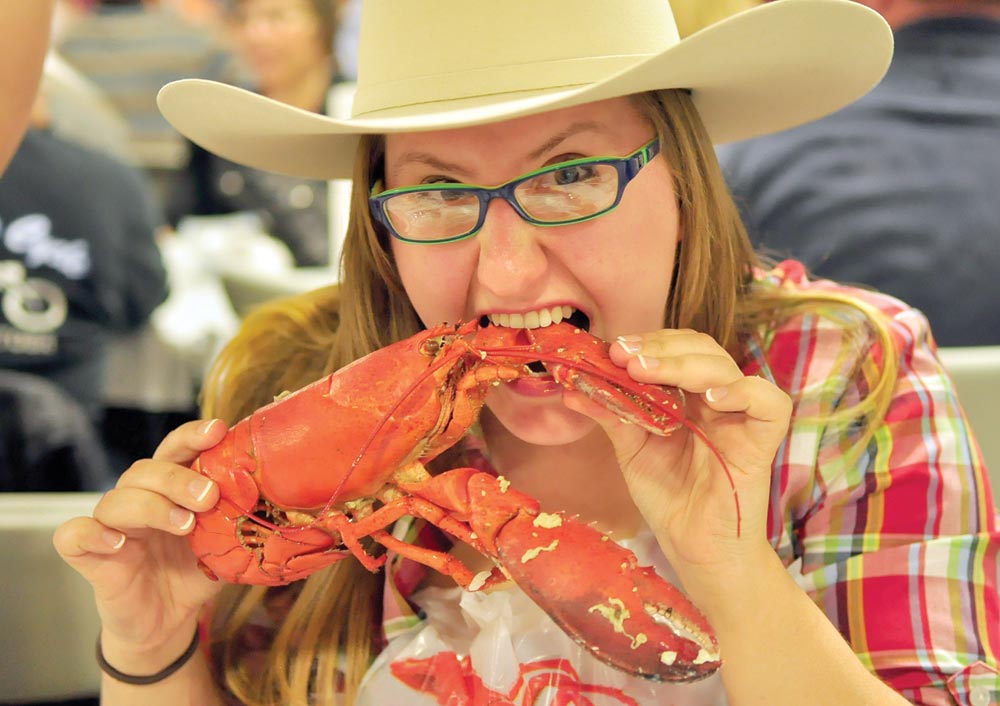
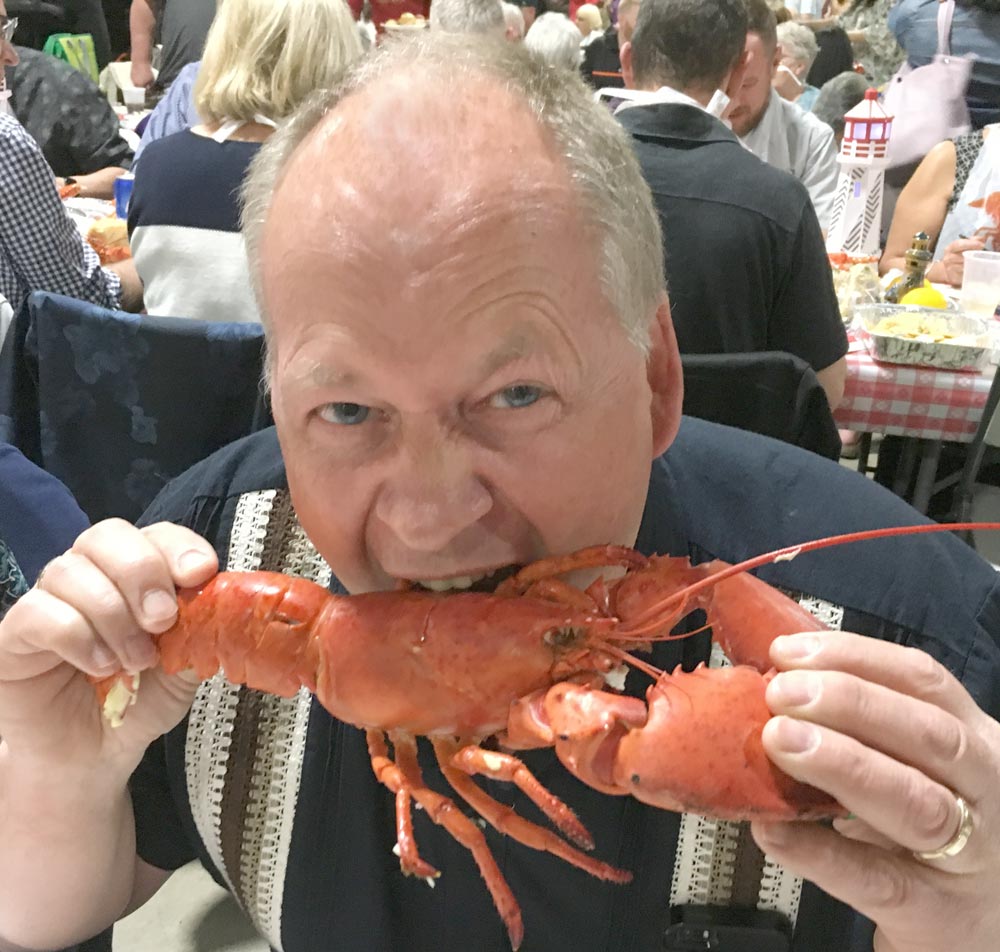
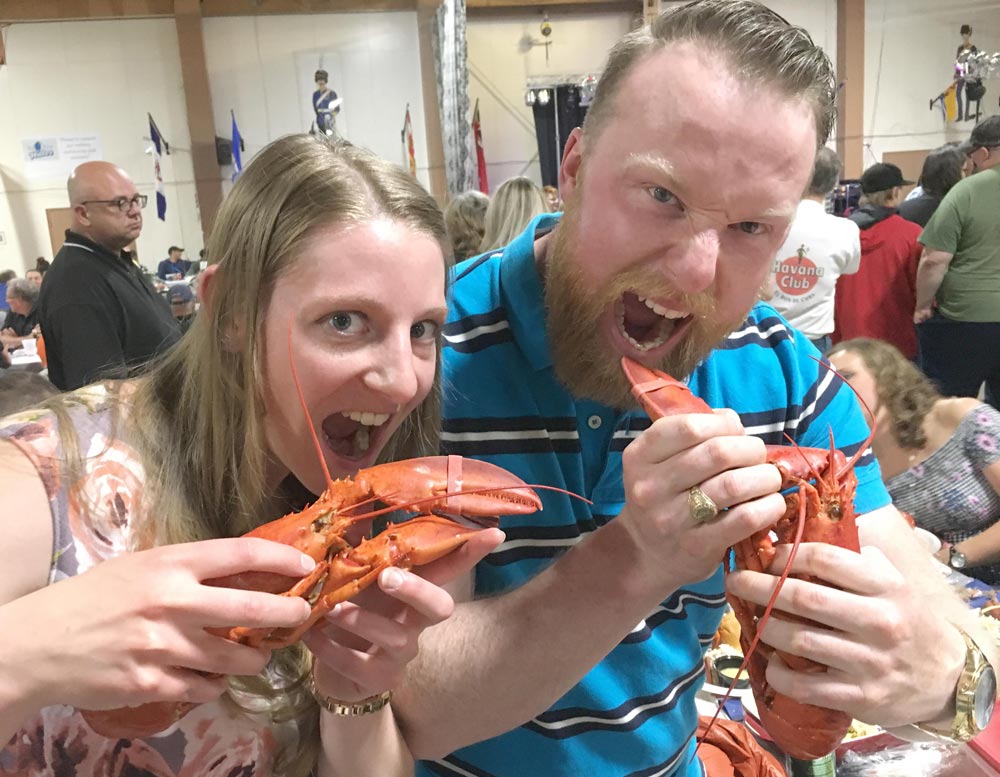
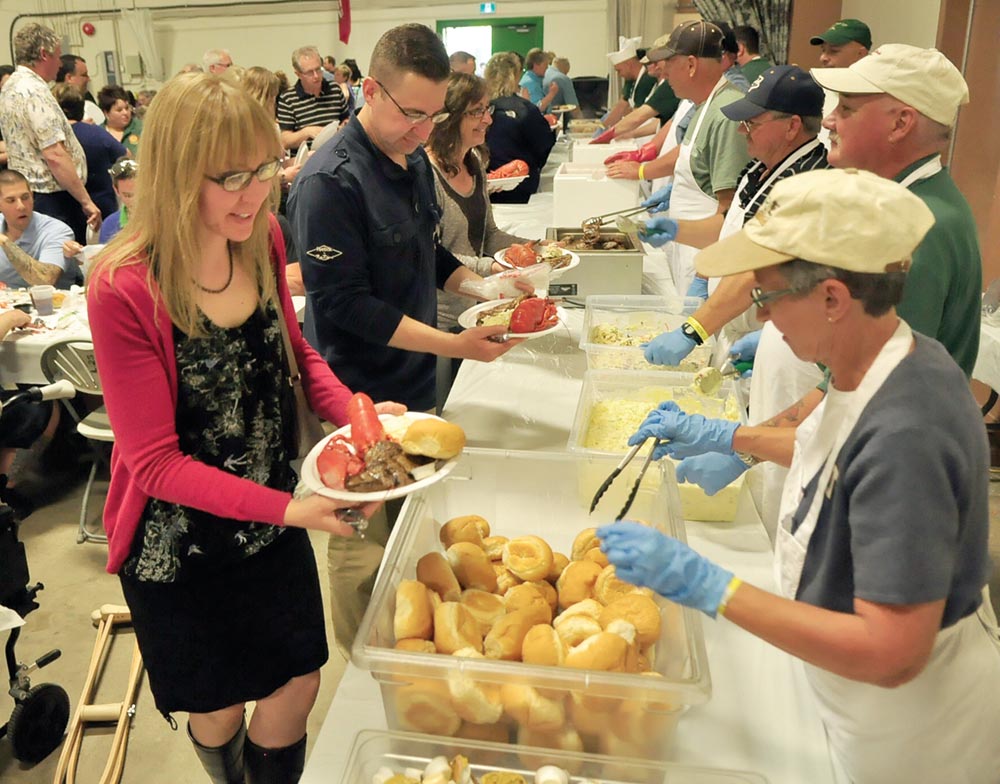
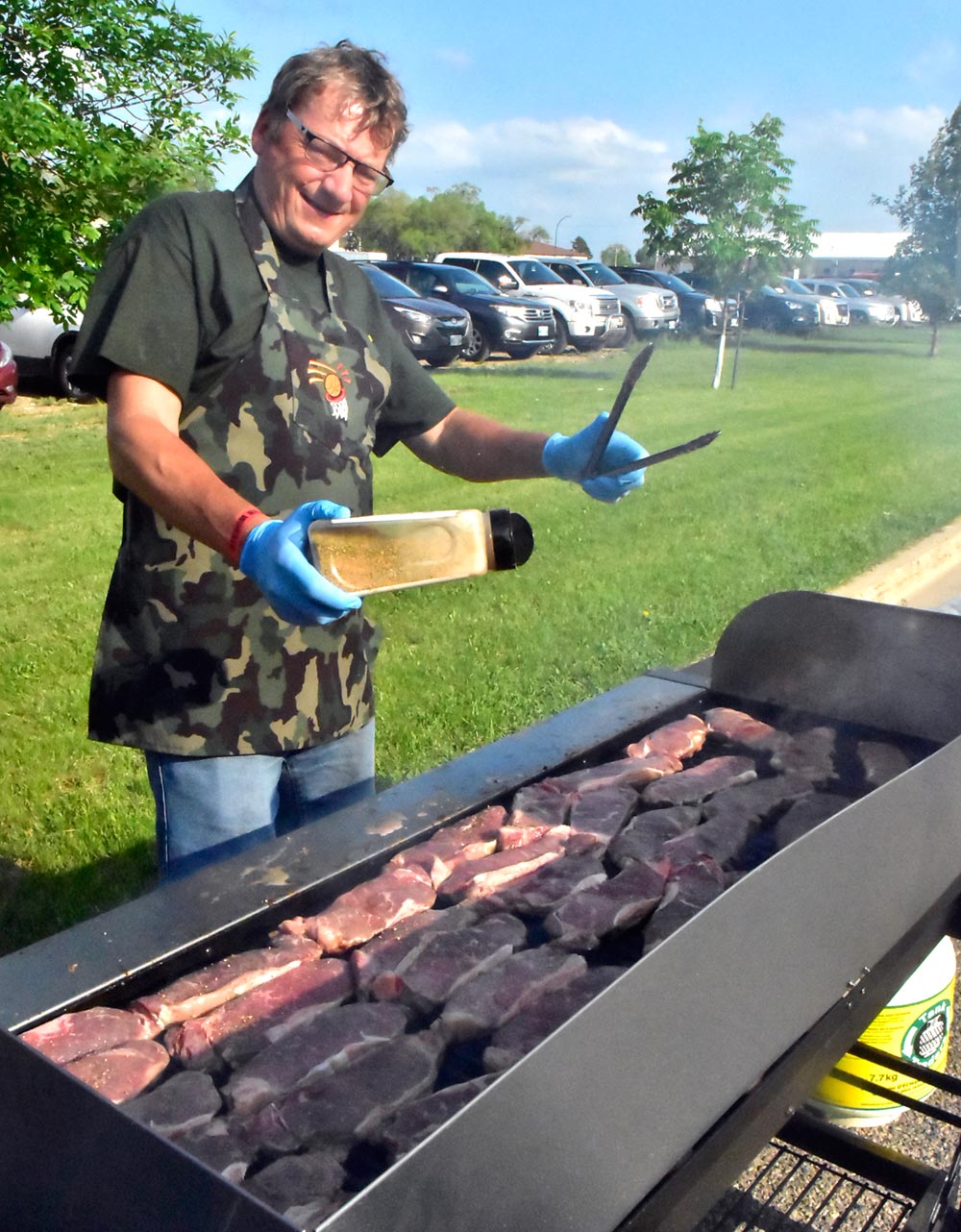
Stag editor Jules Xavier is always looking for that Lobsterfest goer who poses with their freshly-cooked lobster for the ‘bite’ photograph, often used in the CFB Shilo calendar to promote this popular Base event. The line-up is also a popular spot to capture the action, with Shilo and District Service Club members and volunteers serving the meal. Adjacent to L25, the volunteer steak chefs like MWO Jason Power or Jim MacKenzie are hard at work cooking steaks and sharing stories from past events. Veteran Lobsterfest goers also come prepared before lining up, with their own snacks and special butter warming dishes to be used at their decorated tables. Plus, then bring their own tools to crack open their lobsters. Photos Jules Xavier/Shilo Stag
Jules Xavier
Shilo Stag
Are you ready for the 17th annual Base Commander’s Downcomer Lobsterfest? Ready to buy tickets for the June 10 event?
According to Shilo and Region Service Club vice-president Maj Lindsay Jackson, they will go on sale starting Feb. 16 from the RCA Museum. Cost $55 each.
Ask the receptionist when you arrive at the museum and she will direct you to Maj Jackson’s office. Only cash or cheque — made out to Shilo and Region Service Club.
Tickets will also be available from mess manager Patsy Marion at the Junior Ranks Mess.
With this being my final Lobsterfest prior to retirement this summer, and returning to British Columbia where crab is the crustacean of choice, I will relish the opportunity to cover the event at L25. Likewise, BComd LCol Chris Wood said he’s looking forward to being part of this popular community event before his time as Base Commander is up, and his CAF career sees him move on to his next posting. What would have been his inaugural Lobsterfest in 2022 was cancelled as were previous events in 2020 and 2021 due to the COVID-19 pandemic.
Make sure you act quickly, as tickets for this annual event always sellout quickly.
My introduction to lobster came as a youngster when my father was posted to an RCAF radar base, the now defunct CFS St. Margaret’s in New Brunswick.
Who knew his five children, fussy eaters that we were as kids, would enjoy lobster when he offered it to us. But we did, so that meant his periodic lobster feasts were interrupted while we were posted to the east coast. Many a morning we discovered a pile of lobster shells in the kitchen garbage can. Our father would feast after we went to bed.
While doing research about this east coast delicacy, I was informed eating a lobster is not an exercise in etiquette. This is apparent when you have attended previous Lobsterfests since arriving on the prairies from the Comox Valley in 2012.
Steamed or boiled, when my lobster — and the steak I’ll trade with anyone for their lobster if they are not a fan of seafood, but prefer Canadian AAA beef off the barbecue — arrives I have been told to let it cool so as to avoid being scalded by boiling water when handling it.
The simplicity of eating a lobster depends partly upon the time of year. Lobsters moult — who knew they shed their shells — each year in early summer. Just before shedding in May or June the shells are thick and hard, while the claws are difficult to break open. Just after moulting, the shells are as thin as heavy paper, the claws easy to open without tools. The shells harden within a few weeks after moulting, but an August lobster is still much easier to eat than a May lobster.
How do you consume a succulent lobster sharing space with a barbecue-drenched steak, cole slaw and a bun on your plate? Along with the hot, just-cooked lobster, you might want the following items:
• Lobster bib to protect clothing from sprays of sea water, lobster juice and butter
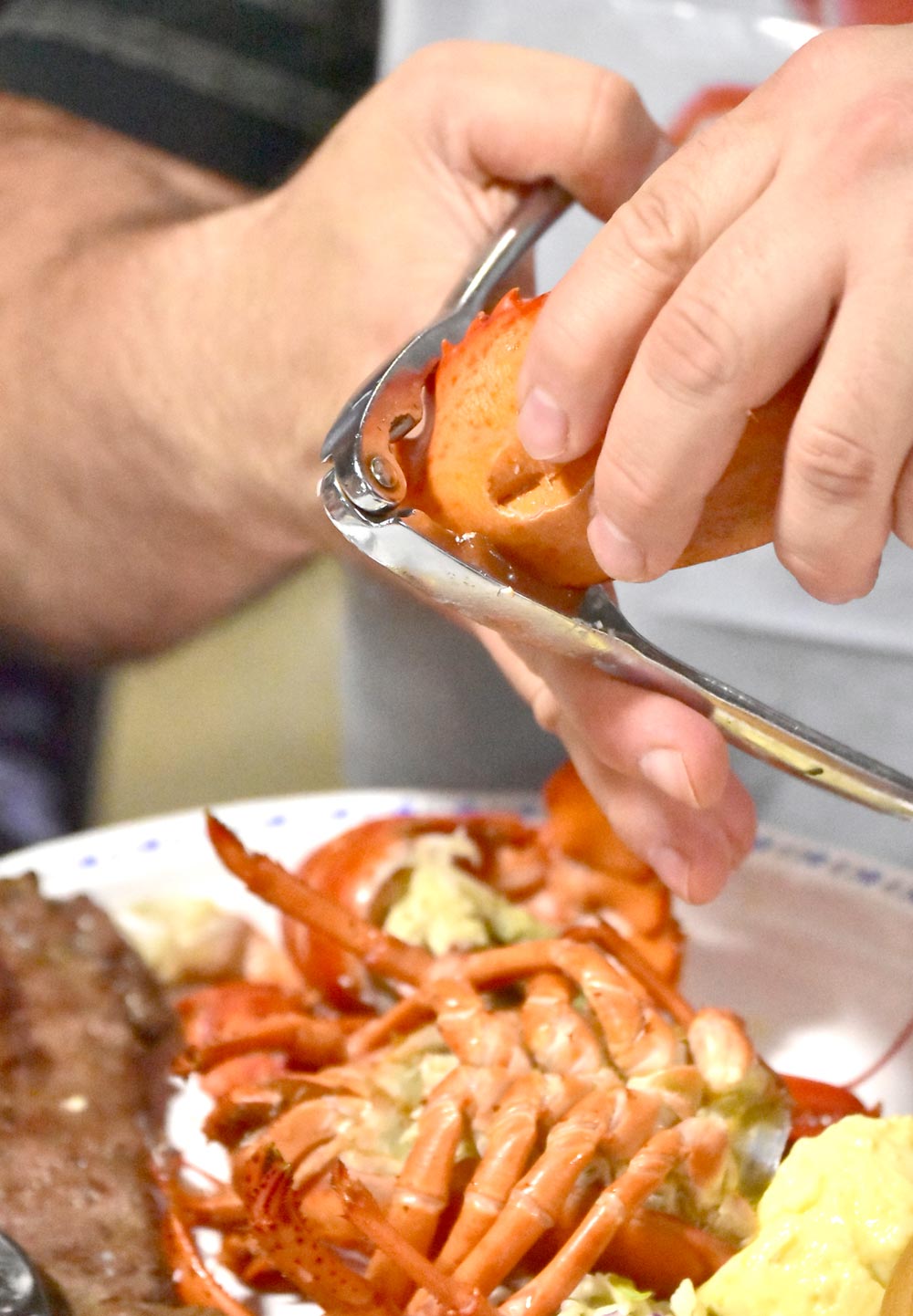
• Claw cracker — like a nutcracker used on walnuts at Christmas — to crack the claws so you can extract the claw meat, which is a delicacy.
• Small fork or “lobster pick” — this slender instrument is used for extracting meat from difficult, bony places
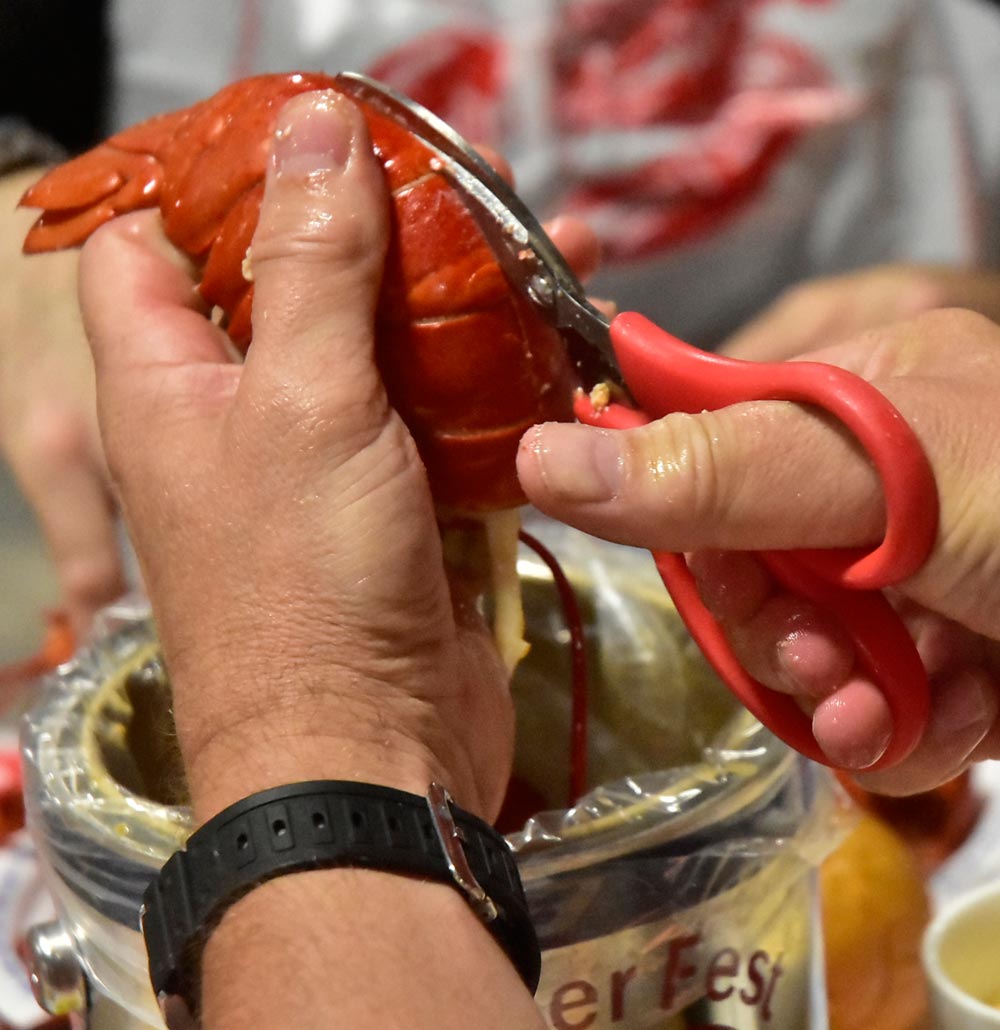
To begin feasting on your lobster, first hold the body in one hand and the tail in the other, and break the tail off with a side-to-side motion. Holding the tail upside-down, stick a fork (upside-down) between the bottom of the shell (now facing upwards) and the tail meat and pull the whole chunk of tail meat out.
The tail is the largest meaty portion of the lobster, but there’s lots more. Each claw should be broken and the meat taken out with the small fork or lobster pick, even from the joints which connect the claw to the body. This is the most delicious part — some say a real delicacy.
In larger lobsters weighing more than a pound and heavier, you will find tender little bites in other places, too. Twist the four “flippers” off the end of the tail and chew out the delicate meat inside. Twist off each small leg: in the knuckle next to the body there’s a nugget, and you can chew tender meat out of each segment in a leg.
Lobster enthusiasts who are Lobsterfest veterans will tear the carapace — hard body cover — off, split the body lengthwise, and behind where each leg was attached there is a good bit of meat.
Of the innards, the gray-coloured liver — called tomalley — is edible. Restaurant chefs sometimes use it in sauces, though not everyone likes it.
If you find a waxy red substance in your lobster, you have a female. It is roe. The eggs are edible if you feel daring.
I will enjoy my final lobster, and raise a claw to my father in his memory — ironically on the day he died in 1983 at age 50 — and thank Sgt Fabio ‘Swish’ Xavier for introducing me to this east coast delicacy.