


Jules Xavier
Shilo Stag
With three generations before him serving in the military, it was only natural CFB Shilo’s new Base Commander follow in their footsteps.
Born in Edmonton, LCol David Cronk enrolled in the Canadian Armed Forces (CAF) in 2002 under the Direct Entry Officer program as an Armour Officer. After completing his French Second Language course and Armour Officer Qualification (AOQ) training he was posted to Garrison Edmonton to Lord Strathcona’s Horse (Royal Canadians) — the Army acronym LdSH(RC).
A fan of the NHL’s Vancouver Canucks and MLB’s Toronto Blue Jays, LCol Cronk never lived in Europe when his father Sgt Paul Cronk served with the RCAF and at the Airborne School.
“Though my father was Airforce, he spent half of his career in Edmonton with the Airborne depot, as he was a parachute rigger qualified and a jumper,” he recalled.
His great-grandfather Capt John Levett fought in the Great War, with the BEF’s Yeomanry Regiment. The next generation, his grandfather Cpl Allan MacDonald, was with the Governor General’s Horse Guard during the Second World War.
LCol Cronk has served two regimental tours with LdSH(RC), with employment as a Tank Troop Commander, Tank Squadron Battle Captain and 2IC.
His extra regimental service includes two tours at the Royal Canadian Armoured Corps School, where he served as an instructor, course officer, Officer Commanding (OC) with A Squadron (tank) and OC Standards Squadron.
He completed further staff employment at the Land Forces Western Training Centre as the adjutant; Observer Controller Trainer and G1 at the Canadian Manoeuvre Training Centre; and executive assistant to the Deputy Commander with Canadian Joint Operations Command HQ.
Prior to being posted to CFB Shilo to be the new Base Commander, LCol Cronk was the G35 section head with NATO Multinational Division-Northeast in Elblag, Poland.
LCol Cronk’s has four operational deployments on his military resume: In 2007, he deployed to Kandahar, Afghanistan as part of the joint Task Force-Afghanistan HQ; three years later he returned to Kandahar as part of the Kandahar Provincial Reconstruction Team; in 2013 he deployed to Kabul as part of the Canadian Contribution Training Mission-Afghanistan HQ; and finally, in 2020 deployed to Kuwait’s Ali Al Salam Airbase as part of the Joint Task Force Op IMPACT headquarters.
A graduate of Army Operations and Combat Team Commander’s courses, he is also a grad of the Joint Command and Staff programme. He holds a Bachelor of Science (geography) degree from the University of Victoria and a Masters of Defence Studies from RMC in Kingston, Ont.
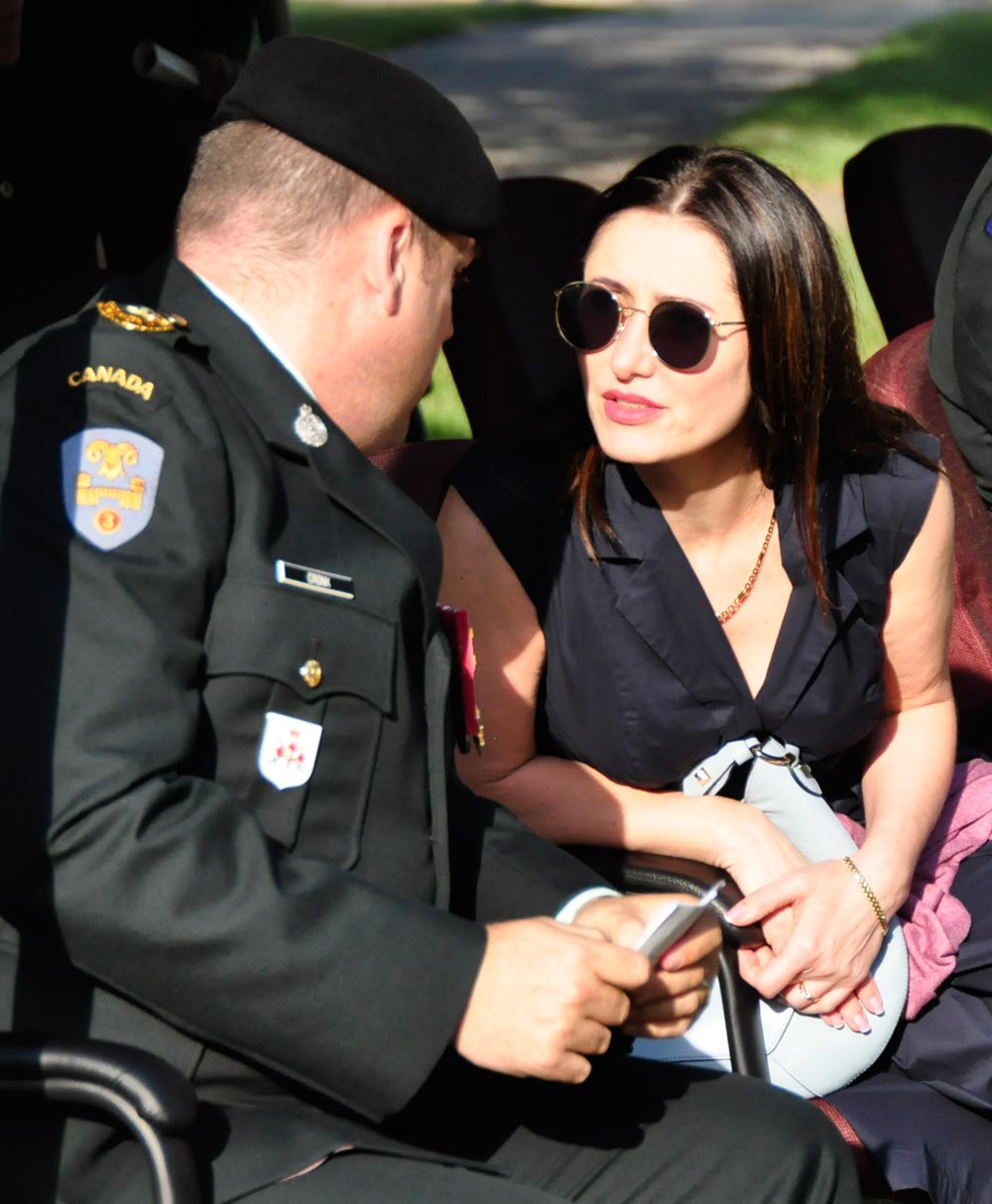
An avid traveller who enjoys cycling, long distance trekking and the outdoors in general, LCol Cronk will reside in the BComd’s residence along with his wife Dr. Mariola Wojtowicz (dentistry).
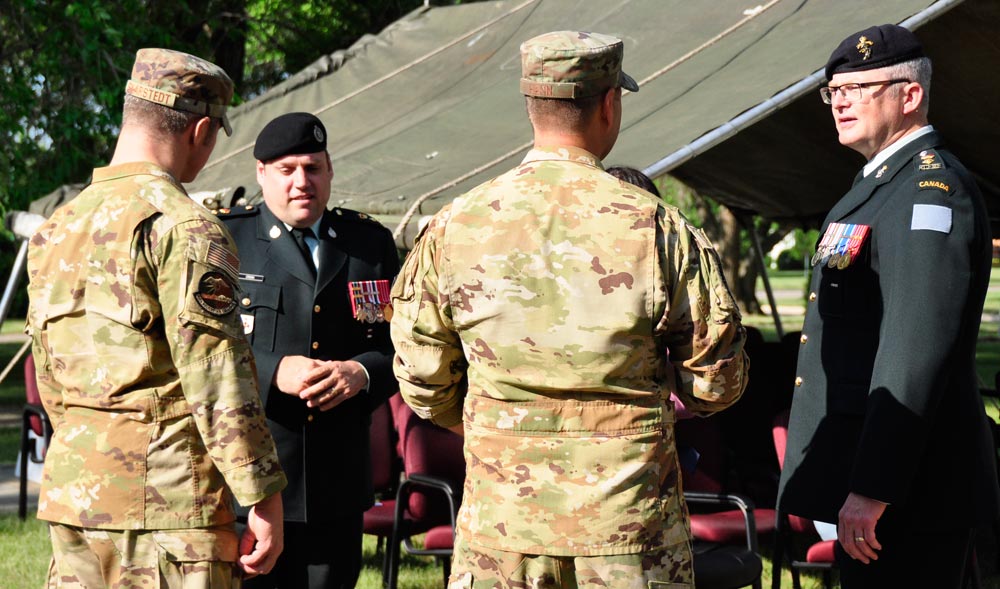
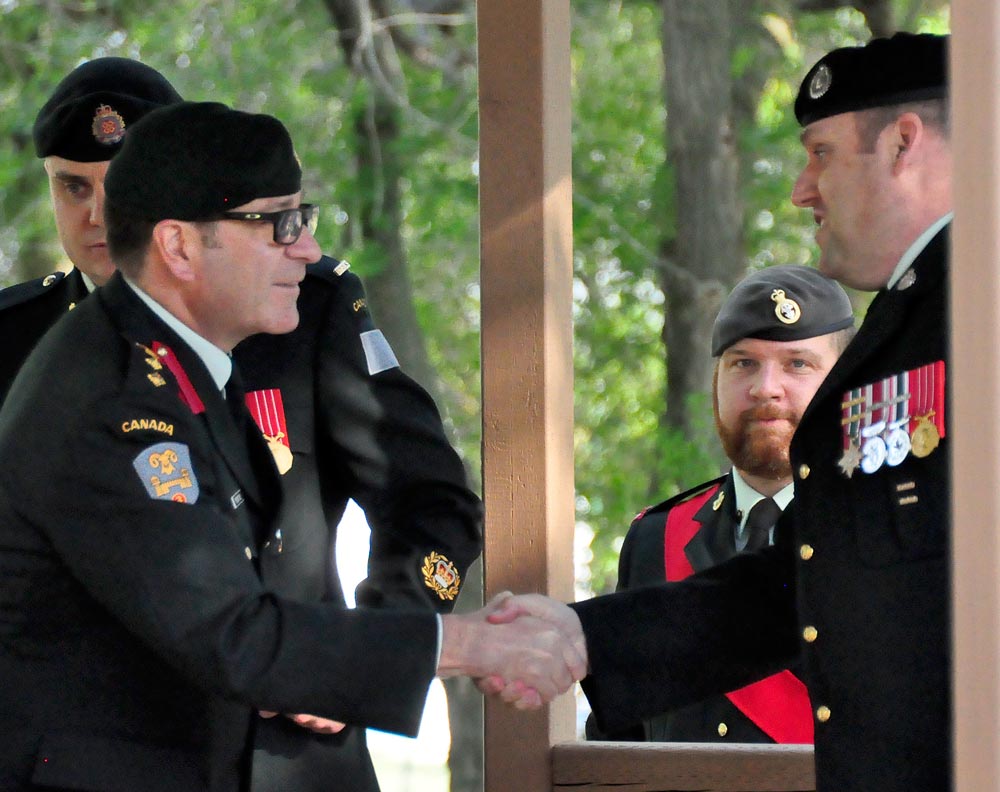
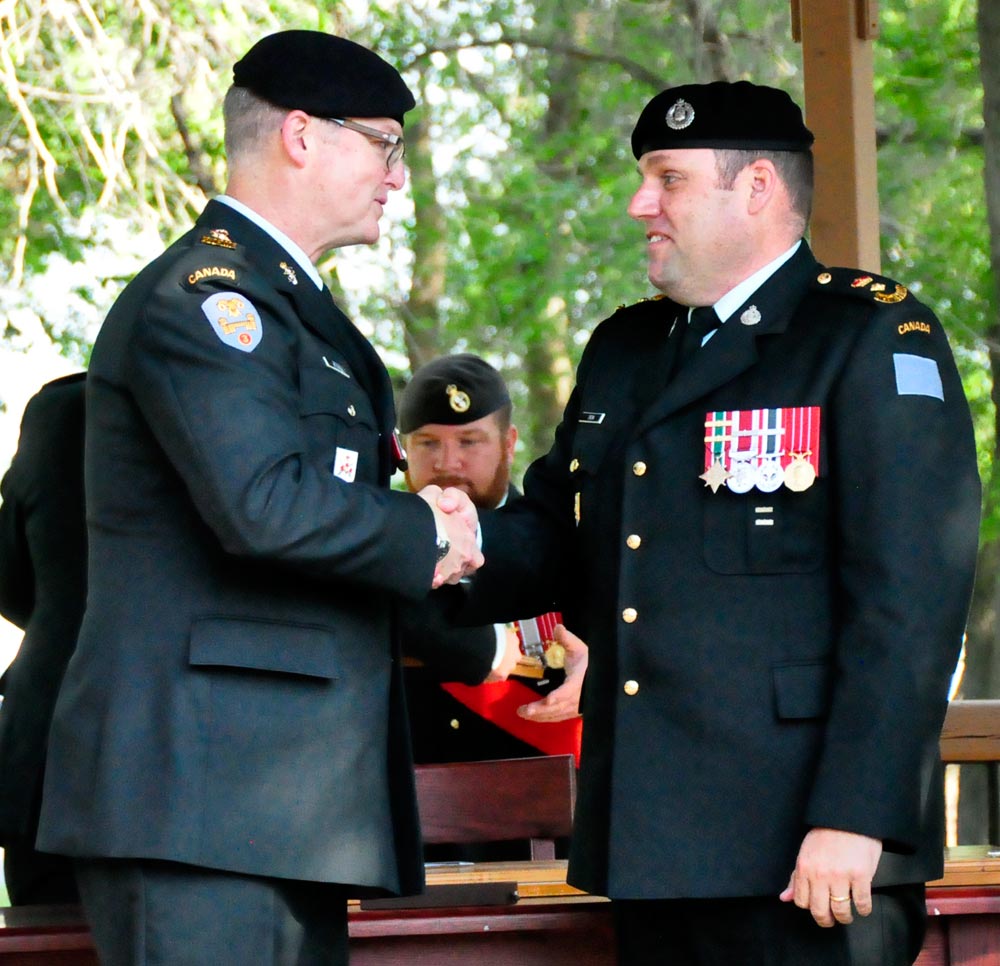
Prior to his arrival for his June 26 Change of Command (CoC) ceremony at Canoe River Memorial Park, the Stag reached out to LCol Cronk in Poland for a Q&A interview.
Shilo Stag (SS): What was your influence in choosing the Army for your military career? How did you find yourself as part of the historic Lord Strathcona’s Horse (Royal Canadians) out of Garrison Edmonton?
LCol David Cronk (DC): “I am a fourth generation military member, as my great-grandfather served in the British Cavalry during the First World War; my grandfather served in the Canadian Armoured Corps during the Second World War and the Airforce in the post-war years. And my father served in the Airforce for 25 years during the Cold War. So, I really felt like I grew up around the military and as I graduated from university and was about to enter the workforce, I quickly gravitated toward military service for myself.
“As for my reasoning for joining Lord Strathcona’s Horse (Royal Canadians), as my great-grandfather and grandfather served in the Cavalry during [two] World Wars, the thought of following in their footsteps was appealing. Additionally, as I grew up in British Columbia and I knew I wanted to be in the West.”
SS: What were your thoughts when you were informed you’d be taking command of CFB Shilo?
DC: “I was incredibly humbled and privileged to be offered command of CFB Shilo. Though, my experiences in Shilo are limited I have always heard positive things from my colleagues with 2PPCLI and 1RCHA who have served here and some of my fondest military experiences involve collective training exercises with these two fine units.
“Also, I immediately reached out to my fellow Strathconas, Col Dave MacIntyre and Col John Cochrane, who commanded CFB Shilo in the past, and they both without reservations recommended CFB Shilo as an exceptional experience both professionally and personally. Needless to say, I could not be happier about the opportunity.”
SS: What were you doing prior to being informed you would be posted to CFB Shilo? What was your experience working in Poland like in contrast to past CAF jobs in Canada?
DC: “For the last two years, I was the G35 Section Head at NATO Multinational Division Northeast in Elblag, Poland. The position has been eye-opening, particularly due to the increased operational tempo as a result of Russia’s unprovoked invasion of Ukraine.
“My experiences in NATO have reinforced my belief in the power of co-operation, collaboration and communication, the 3Cs. The Division was staffed with personnel from 15 different troop-contributing nations, and to synchronize individuals with slightly differing backgrounds and perspectives it is important to impart the 3C’s, with a touch of humility and patience.
“Really not that different than working in the CAF context, where the same attributes are as equally important. In all it was an amazing experience that was highlighted by the warmth and kindness of the Polish people who really made sure I was integrated into the community.”
SS: What did you know about CFB Shilo and the history of this military location before arriving here?
DC: “Prior to now, I had only been to Shilo a few times for very short work trips. That said, during my time in 3rd Canadian Division and 1 Canadian Mechanized Brigade Group [1CMBG], I have worked very closely with members of 2PPCLI and 1RCHA many times. I am aware of Shilo’s importance as the Home Station of the Artillery, and I look forward to assisting in my role as the Base Commander in this function. I have been informed of the strong bonds Shilo has with the local community and for myself that is something I want to emphasize and build even stronger.”
SS: What is your approach when it comes to leading soldiers under your command?
DC: “I like to impart trust from the get go. I like to think I am not a leader who is preoccupied with the fine details. My experiences over my last few posts has been that as long as the leader provides clear and concise direction early with well understood expectations, than the personnel under your command will amaze you with their ingenuity.
“I truly want my teams to feel like they have my trust and the space to find solutions to tasks I give them, and to feel empowered and to take ownership of their tasks.”
SS: Describe your personality when it comes to soldiering — and when you are away from the job?
DC: “I am fairly outcome-oriented. Like I mentioned, I like to give people the benefit of the doubt. That said, like most leaders, my expectations of performance are relatively high. I believe in moving forward and all tasks or challenges are learning opportunities.
“I worked for a previous Commander who used to say ‘Fail Forward Fast.’ To me, this means accepting risk and delegating authority to enable your team, knowing mistakes may happen. As long as those mistakes are genuine and done with the best of intentions, I aim to be supportive. At home, I think I am even more relaxed, but I suppose my wife would answer that question more accurately.”
SS: What makes a good commander when it comes to dealing with the day-to-day Base operations?
DC: “For me it is being consistent and clear in my direction and intent, the team and units on Base need to know what they can expect for Base support.”
SS: What advice has outgoing BComd LCol Chris Wood left you during your handover?
DC: “Chris gave me a multitude of pieces of advice, all astute and valuable. If I could pick the most important thing he imparted on me, it was to manage the tempo of my team. Across the CAF, there exist manning and staffing issues that place additional stress on all members of the Defence Team. It is important as the BComd I am attuned to this and am keeping an eye open for fatigue.”
SS: What are your objectives for the Base during your two-year tenure at the helm while working with units like 2PPCLI and 1RCHA or the many lodger units on this prairie Army training Base?
DC: “This is relatively straight forward. I aim to ensure all the units on Base are receiving the support they require to meet their own tasks. Key to this is also ensuring lines of communication between the Base and Lodger Units remain open and collaborative. CFB Shilo exists to support operations and training, so it will remain one of my main priorities.”
SS: Finally, what goals have you set for the men and women under your command, plus goals for yourself during your time in Manitoba?
DC: “I would say my main goal is remaining focused on our support requirements, while also managing our individual work-life balance. Sometimes easier said than done. This leads to the goal for myself, to build and establish a culture with CFB Shilo where people feel enabled and capable and willing to speak truth to power. This will be my first time living in Manitoba, so personally I am keen to explore all the province and region have to offer.”