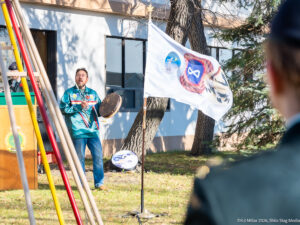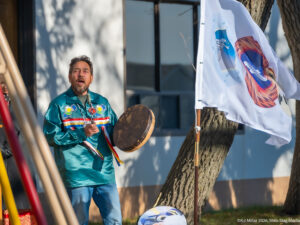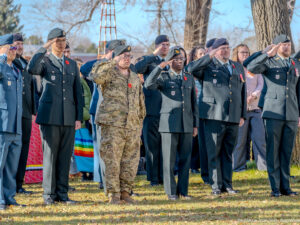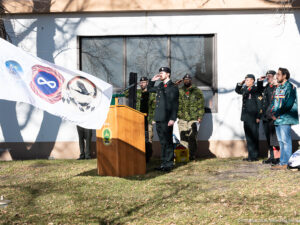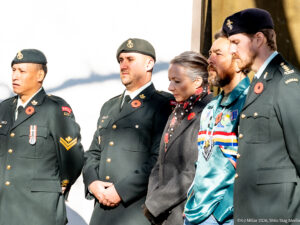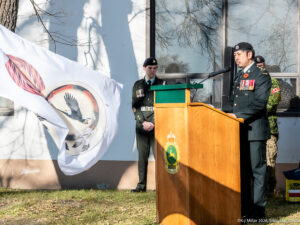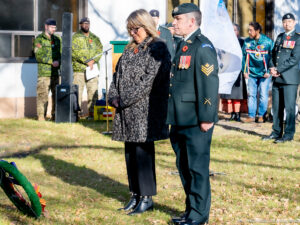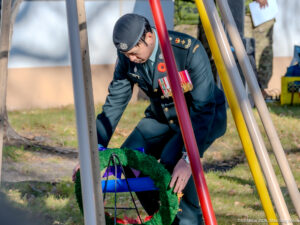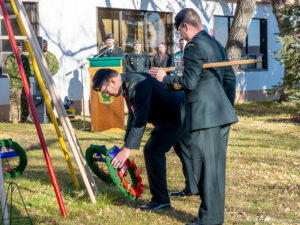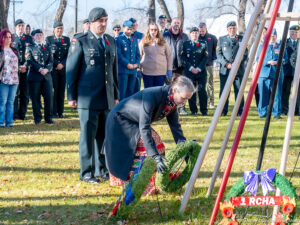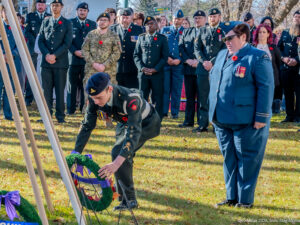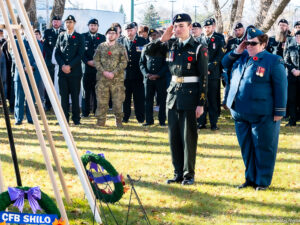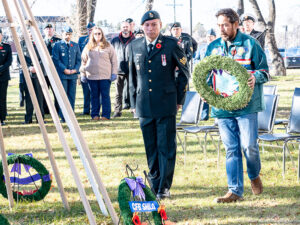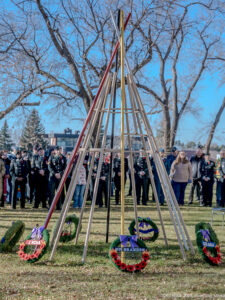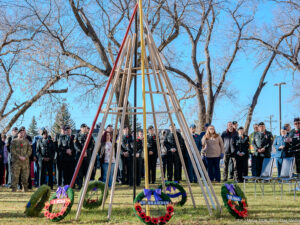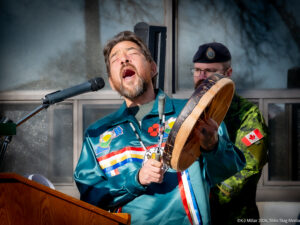
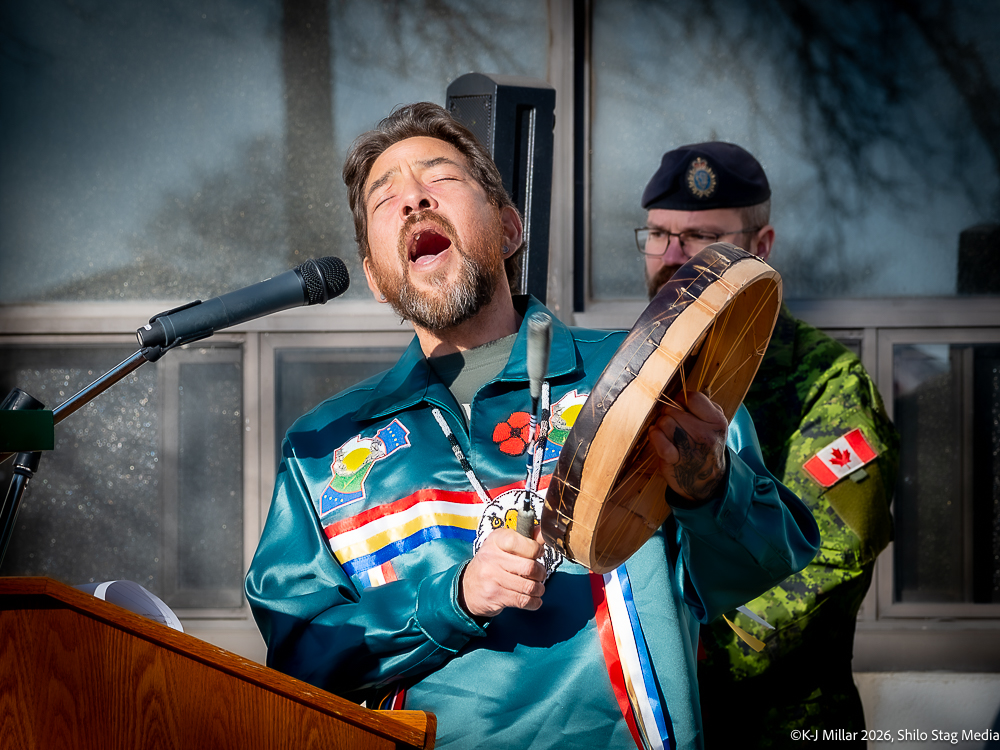
Jason Gobeil, an Indigenous Knowledge Keeper, sings and drums during the Indigenous Veterans Day Ceremony at CFB Shilo on Nov. 6 (Photo: K-J Millar/Shilo Stag News)
Zainab Akande
Shilo Stag Media
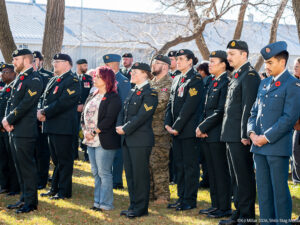
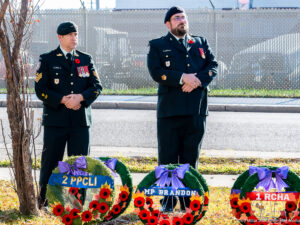
CFB Shilo honoured Indigenous people who have served in Canada’s Armed Forces and recognized their contributions to the country’s military history in a reflective commemoration ceremony on Nov. 6.
Indigenous Veterans Day was established in 1994 to recognize the contributions of First Nations, Inuit and Métis veterans to ensure their stories and sacrifices are not overlooked. While Remembrance Day honours all who have served and sacrificed, Nov. 8 provides an additional opportunity to recognize Indigenous Veterans’ experiences and history.
The Base held the event ahead of the national day of recognition to maximize public participation.
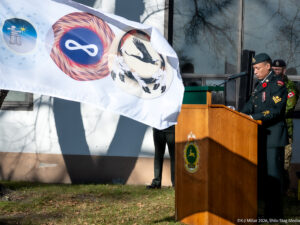
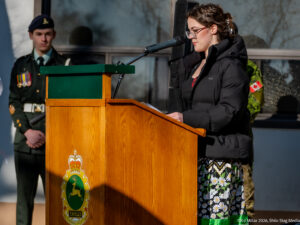
Speakers included Base Commander Lieutenant-Colonel Jack Nguyen; Mirae Chabot, who spoke about the role of Cree code talkers during the Second World War; and Jason Gobeil, an Indigenous knowledge keeper, who reflected on the importance of remembering Indigenous Veterans.
In his opening remarks, LCol Nguyen described the event as an opportunity for the community to reflect on those who came before and take steps toward recognizing Indigenous Veterans while coming together in solidarity.
He said moments like the ceremony help us recognize the spirit of truth and reconciliation.
“We recognize the sacrifices they made, the toils they endured and the hardships that were placed upon them.”
Overall, it is estimated that more than 12,000 Indigenous people served in major conflicts during the 20th century, with about 500 making the ultimate sacrifice.
More than 4,000 Indigenous people served during the First World War. During the Second World War, more than 3,000 First Nations members served, alongside Inuit and Métis individuals.
Indigenous service members also brought important skills and knowledge to military operations. During the Second World War, the Cree language helped encode military communications, making it difficult for enemy forces to understand important messages.
Cree code talkers were an elite unit tasked with developing a coded system based on the Cree language for disguising military intelligence. No one ever broke the codes.
Chabot, in her speech, said they were recruited in 1942 and used a coded system based on the Cree language to send sensitive military information, including troop movements and bombing operations, which made their code impossible to break by enemy forces.
“Despite facing discrimination, many Indigenous people volunteered for military service, helping to contribute to the war effort and advance equality,” she said.
The commemoration also provided an opportunity to reflect on the people behind the history and the importance of remembering everyone who answered the call to serve.
Gobeil encouraged those present to remember all Indigenous service members, not only those whose stories are widely known.
“Our history is not old; our history is still new. When we come together and honour Indigenous Veterans, let us not just make a mark on those who served us well as heroes, but let us remember those who stood for all of us. They were [each] heroes. They all stood on those lines, and they all took an oath to protect our country,” he said.
PHOTO GALLERY: