

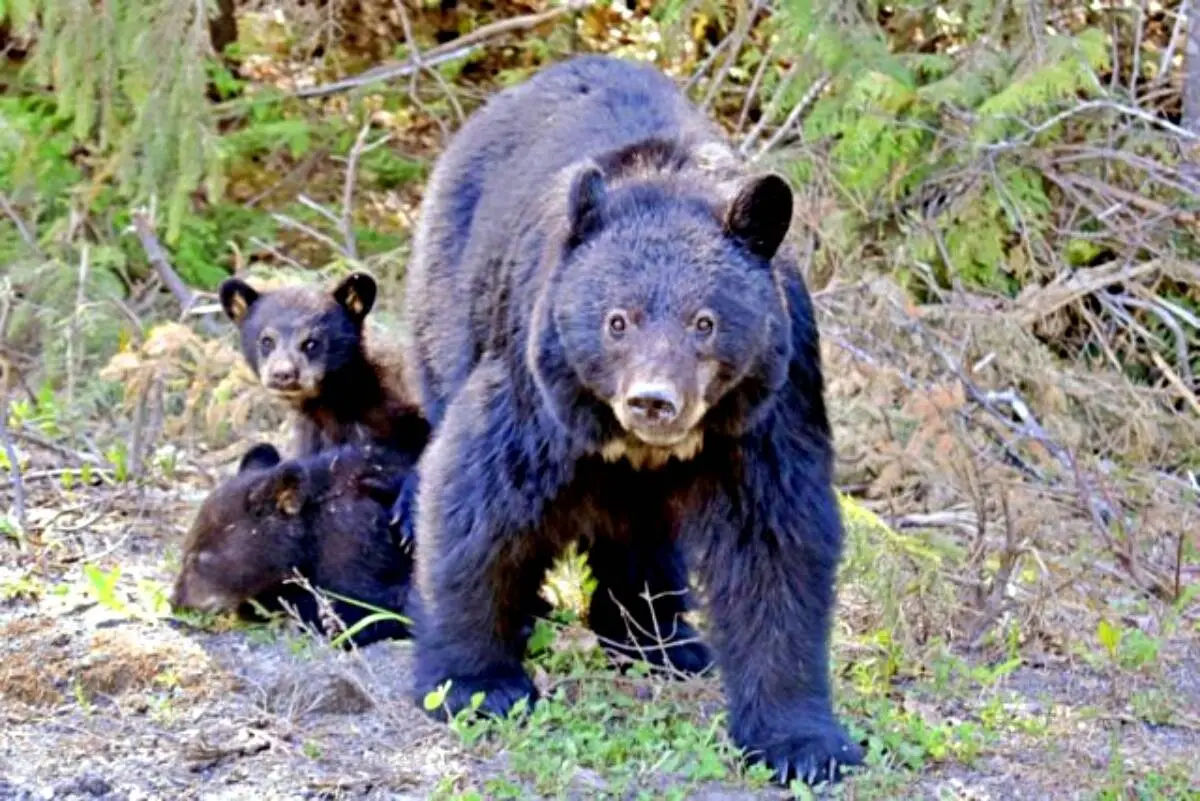
Black bears are the common species in the CFB Shilo and Westman area. They range in colours from blonde shades to black, said Manitoba Conservation Officer Sergeant Cody Bruneau of the Carberry detachment after June sightings of bears around the Spruce Woods provincial park and military base. (Photo: K-J MIllar/Supplied)
K-J Millar
Shilo Stag Media
“Be bear aware” is the warning issued by the Conservation Officer Service to Shilo and Spruce Woods residents, including surrounding communities, after receiving reports of black bears in the area, at the Base garbage dump and an unsuccessful bear trap placement at the Shilo golf course recently.
Sergeant Cody Bruneau from the Carberry Conservation Officer branch explained to Shilo Stag News that bears have always been present in the area, particularly in Spruce Woods and the Carberry district, due to the large tracts of Crown land and provincial forest, which are favourable environments and established habitats.
“Black bears are highly motivated for food. They are always on the search and motivated by sights, sounds, odours, and memories of particular food sources. If a bear gets rewarded, it is going to come back.”
Bruneau said most of the bear “conflict” is because of attractants, so when the COS receives a call about a bear, the conversation always starts with human patterns.
“People may not know what an attractant is. They have always lived in the area, and they have always done the same things, but now a bear shows up.”
“We encourage people to double bag garbage and place it in a bear-resistant container,” he said. Also, garbage ideally should be stored in a garage or shed to be placed at the curb the morning of collection. He added a reminder to wash out bins.
“It’s good to rinse those garbage containers out, doing it regularly with bleach or some sort of ammonia to kill any of that smell.”
The COS officer emphasized the importance of removing attractants, such as garbage, bird feeders, pet food, road kill, and cleaning barbecue, to prevent bears from becoming habituated to human food sources.
He also advised on bear-safe practices, such as maintaining a safe distance, using bear spray, and securing camping equipment. Bruneau mentioned a recent unsuccessful bear trap set near the Shilo golf course and highlighted the need for proper bear management in residential and camping areas.
Providing some tips on bear management and behaviour, he said, if you encounter a bear, give it space.
“I think it’s common nature: [people see a bear], they want to get close, because it’s different, it’s unique. Not a lot of people have seen bears before. This can stress a bear, creating a situation. The best thing to do is to give the wildlife space and maintain a good, safe distance.”
“We always say be bear aware. Be mindful of what you are packing in and out [when entering their environment]. If you are in a remote area, don’t put on a headset or earbuds to listen to music. Be alert.”
Bears do not know what dogs are and associate them to negative experiences with wolves or coyotes, he said.
“Bear chases after the dog. The dog runs to its owner because it knows where safety is, and that bear is going to follow that dog back to people.”
“We always encourage people to keep their pet on a leash, but when you are walking in the back country, make a presence. Wear bells or sing loudly.”
Carrying the right tools with you when hiking or camping is a valuable safety measure if situations are encountered.
“These tools could be air horns or bear spray. They will work for other types of wildlife encounters too, like deer, elk, or moose. Sometimes having that airhorn available will snap an animal out of their prey drive because it’s a new noise. They hear it; they are going to flee and run away.”
The COS Sergeant advised that if you encounter a bear, the best thing to do is assess the situation, stop, remain calm, and ascertain a safe way out of the situation, which may mean backing up out of it.
“You are not going to turn around and run. Never run because a bear will chase you.”