


Jules Xavier
Shilo Stag
Have you ever wondered about the war stories which could be told when you walk among the rows of grave markers in the veterans’ section of the Brandon cemetery?
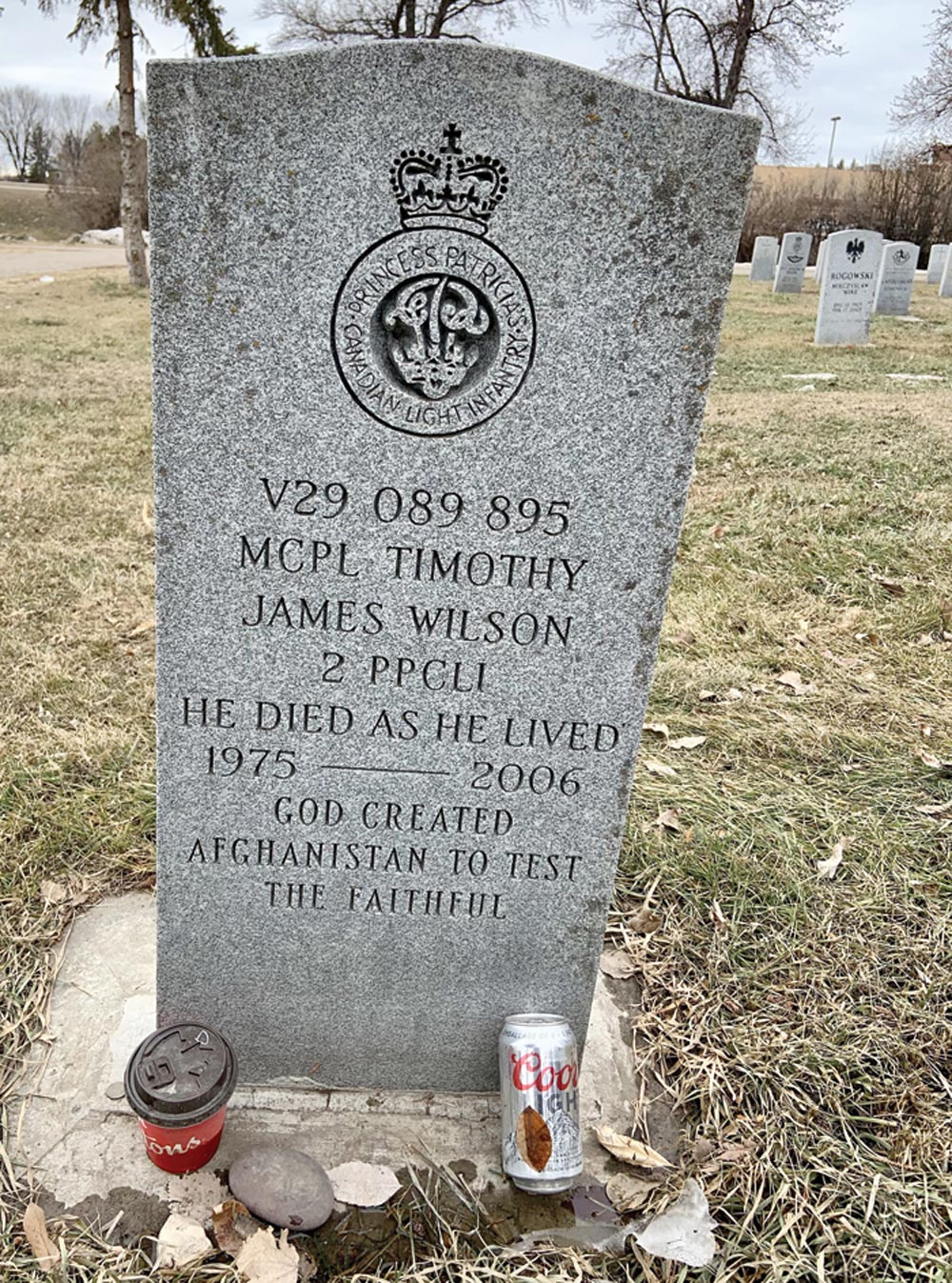
Visiting the 18th Street municipal cemetery is not unlike visiting a library, the rows and rows of granite markers are not unlike bookshelves filled with books — with each military members’ marker the cover for their story.
However, with the passage of time these stories are only known to the next of kin or close friends interred in the ground if that veteran actually talked about their experiences, many of them preferring to not recall the atrocities of war from the trenches in France or battlefields of Holland or Belgium.
Thus, many of the war stories and that individual’s life are unknown to us looking down on the facade of a grave marker.
However, if a military member’s story is researched and shared, a military cemetery becomes a place of remembrance. Sometimes one must tap into family who are in possession of war diaries and photographs.
And by recalling these stories, we are honouring our veterans and learn from their experiences.
But what about the nearby cemeteries and graveyards in the vicinity of CFB Shilo, where veterans who survived the First and Second World Wars, Korean War or Afghan War, plus peacekeeping duties, are now laid to rest after resuming their lives following the end of war?
The Stag ran a story for its Remembrance Day edition in 2021 on those soldiers who died while training at Camp Hughes. Attestation paperwork now digitized helped tell part of their stories now that they are deceased.
Likewise, for those Great War soldiers who died while at Camp Sewell, and later the renamed Camp Hughes, and are buried in the Brandon Cemetery, their stories related to the training is available via attestation paperwork, too. But not the full story.
In past issues, I was able to tell the story of Great War soldiers who had connections to Camp Hughes, or served in the all-black No. 2 Construction Battalion.
I can thank Health Promotion manager Ginger Lamoureux for sharing her great-grandfather’s story in the No. 2 Construction Battalion. She did the family research and told me his story, so if you visit his grave in Thunder Bay one can reflect on Cpl Damascus Virgil’s life.
The same goes for Kendra Minary of Souris, who told her great-great-uncle Pte Cecil Minary’s story from France. She’s done the research during the pandemic of her ancestor who was KIA by a German artillery shell on Aug. 28, 1918. Also trained at Camp Hughes, she shares his story with Stag readers thru the letters he wrote home to family.
Grandkids Kelvin Schrot and Kathleen Mowbray shared their story about Pte Bill May and their uncle Pte Harold May, both men surviving the Battle of Vimy Ridge following their Camp Hughes training experiences. Their grandfather is buried in the Binscarth cemetery, but not in a military section with a Veterans Affairs-issued granite grave marker. So, cemetery goers are unaware of his military service, or what he did during Battle of Vimy Ridge.
Incoming 1RCHA CO LCol Joe O’Donnell also shared his ancestors’ military service, all with the RCA, from himself to his father, plus his grandfather and great-grandfather. That’s four generations with the RCA.
Then Maj Reg Sharpe from RPOU-W Det Shilo also dusted off his great-grandfather Pte Charles Sharp’s military records and family history from Newfoundland, so I was able to tell another Great War story from the perspective of a Newfoundlander serving with the BEF. He’s now buried in the Dozinghem British Military Cemetery after he was KIA on Aug. 17, 1917 near Poeperinghe, Belgium.
PSP admin assistant Lisa Fischer shared her grandfather Sgt Frank Christensen’s story as a Japanese POW for four years after Hong Kong fell on Christmas Day 1941. He left her a detailed memoir of his Army experience in two wars, including serving during the Korean War.
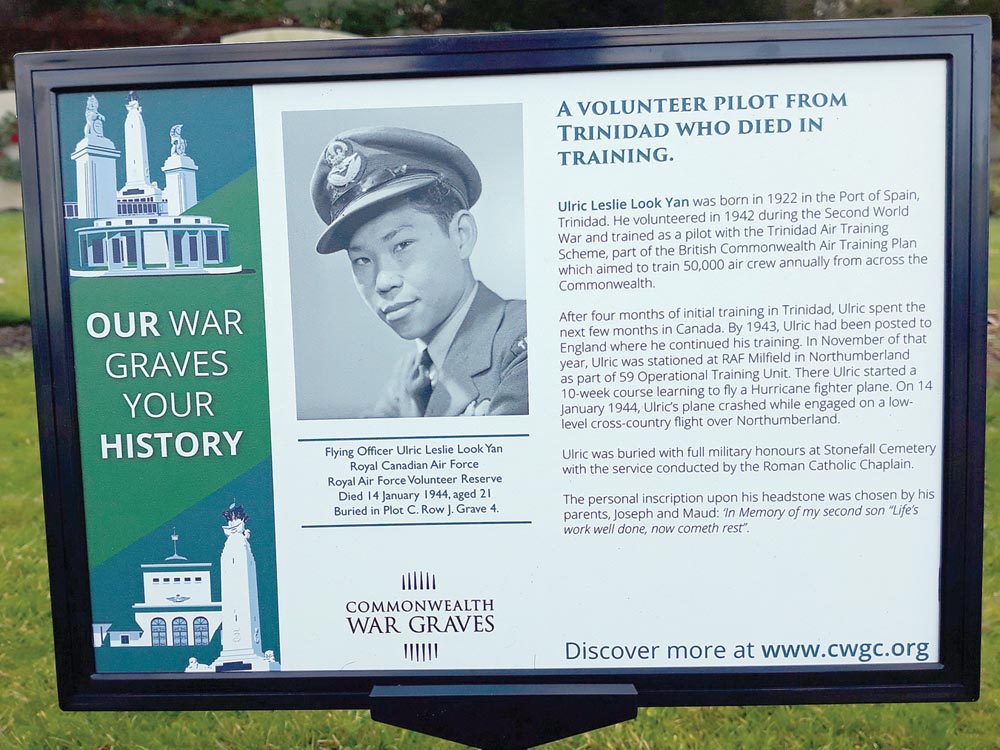
It’s these stories which would be great to share alongside a grave when you stop to read the engraving. For those who visit immaculate military cemeteries in Europe and are in awe by the rows of grave markers, do not assume those who served all have similar grave markers. In fact, this is not the case for Canadian veterans buried in Europe, where the cemeteries are looked after by the Commonwealth War Graves Commission (CWGC).
Did you know the burials in CWGC cemeteries and the inscriptions on the memorials are restricted to those who are defined as “war dead” from the First and Second World Wars.
A deceased individual is “war dead” if he or she died within a defined period from the outbreak of war until a specified cut-off date after each war. These dates are: First World War Aug. 4, 1914 to Aug. 31, 1921 and Second World War Sept. 3, 1939 to Dec. 31, 1947. These dates apply to those who died in service, regardless of how or where they died.
Many “war dead” did not go overseas. So, the enlisted men from Brandon and area who died in accidents or from disease before going overseas while at Camp Hughes are considered “war dead,” while a decorated soldier who died after the cut-off date is simply a military veteran.
All who served their country are military veterans, but only those who died within the defined dates are “war dead.” This includes soldiers who returned home with health problems from being gassed or had tuberculosis and died before Sept. 1, 1921. The families of military veterans who died after the cut-off dates were generally left to their own devices for burials and grave markers. Some were able to take advantage of means-tested financial assistance through the Last Post fund supported by Veterans Affairs Canada — visit the website www.lastpostfund.ca
But most military veterans are buried in family plots with non-military markers, or no markers at all.
Looking only at the First and Second World Wars, about 658,000 Canadians served in the Great War and just more than a million served in the Second World War for a rough total of 1,658,000. The number of “war dead” for the First World War is about 68,000 — 10 per cent of those where served — and for the Second World War 46,000 — 4.5 per cent of those who served — for a total of approximately 114,000 “war dead.”
This means about 1,500,000 veterans from those two wars are buried in more than 2,500 non-military cemeteries or graveyards throughout Canada.
While some of these burial locations have military sections, most military veterans are interred in family plots.
Each of the cemeteries or graveyards located in the hinterland of CFB Shilo where military veterans or “war dead” are interred should not be ignored. In fact, we should remember these individuals who fought for the freedoms we enjoy today by trying to tell their stories.
And do it more than just annually on Remembrance Day.
By telling their stories, we promote this hidden jewel of a cemetery, while honouring military veterans whose stories might otherwise not be told.
If you would like to tell the story of a family member, from your great-grandfather to your dad or uncle who served their country in time of war, the Stag would like to hear from you so we can share your story on these pages.
With files from Victoria-BC-based amateur military historian John Azar