
Andrew Oakden
Stag Special
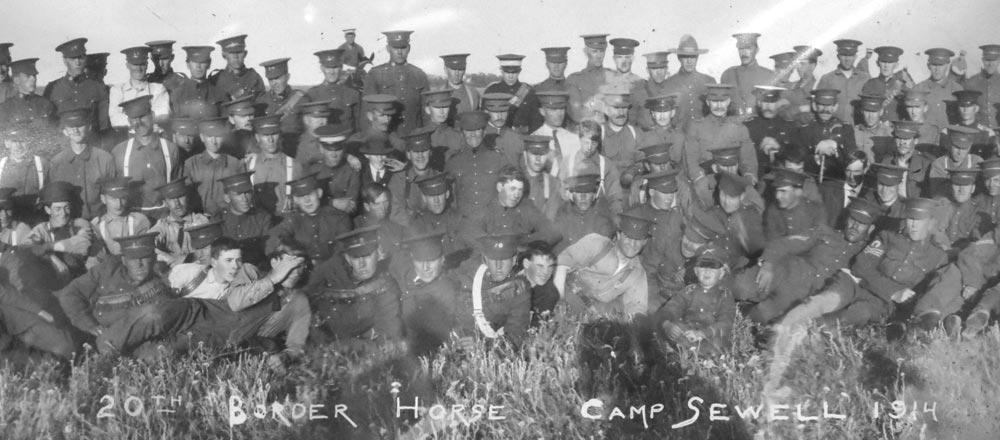
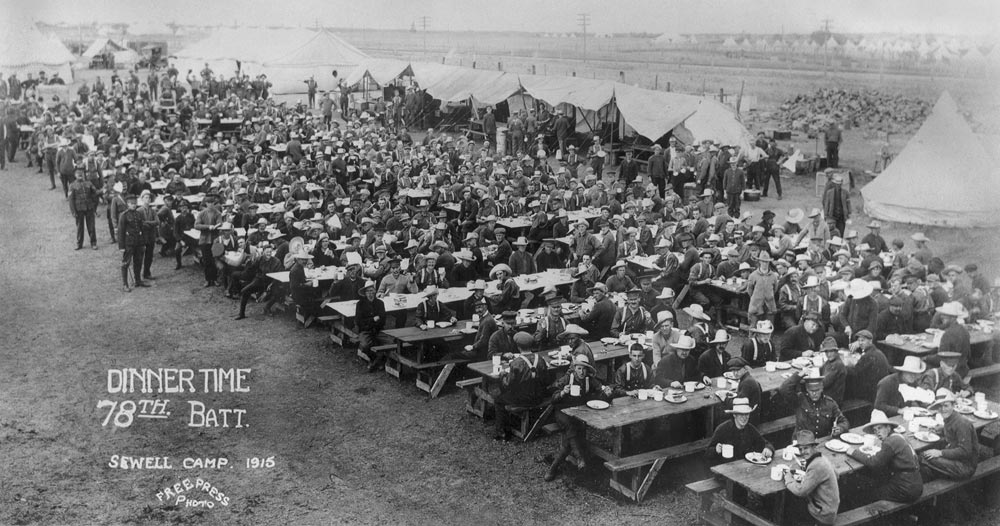
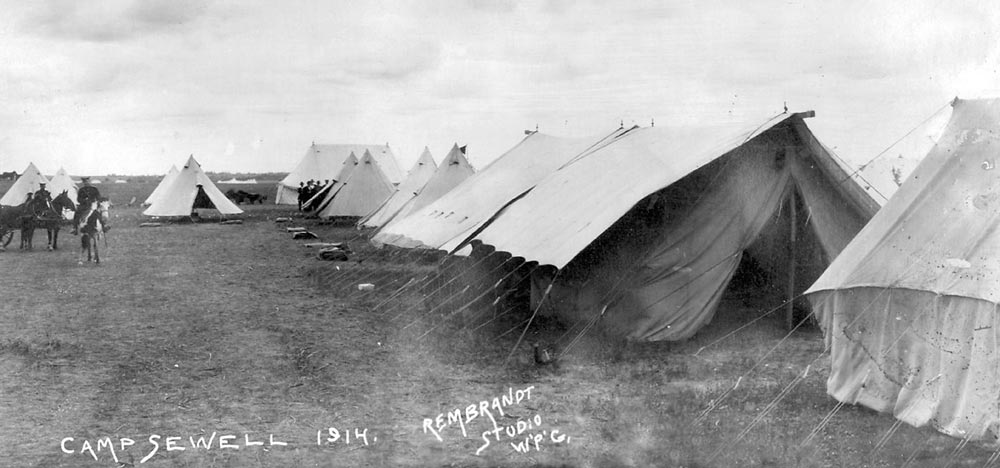
The RCA Museum has a rare scrapbook containing photographs, and insightful commentary from Camp Sewell dated 1911 to 1914.
The military training camp, located approximately 10 kilometres west of Carberry, operated from 1910 to 1934.
The camp was renamed Camp Hughes after MGen Sir Sam Hughes in 1915, a year into the Great War.
The scrapbook photographer was Sgt George Morrow, who came out of the original artillery unit in Manitoba, the 13th Battery CFA, which was also known as the Winnipeg Field Battery.
On Oct. 13, 1871, the Canadian government approved the formation of the 13th Battery stationed at Fort Garry where it was outfitted with two seven-pounder smooth bore cannons left behind from the Col Wolseley Expedition.
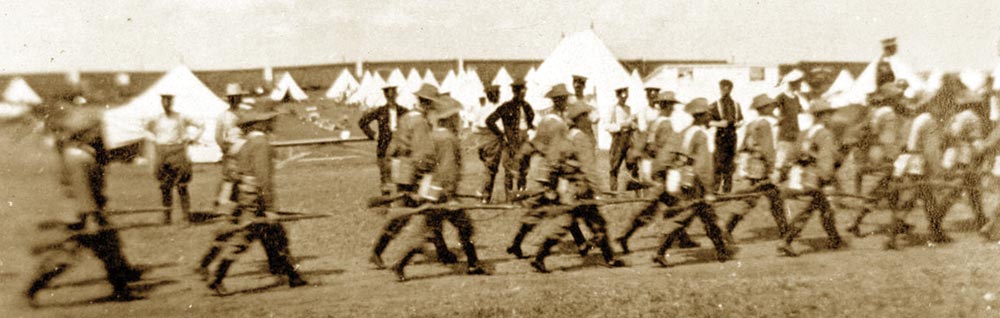
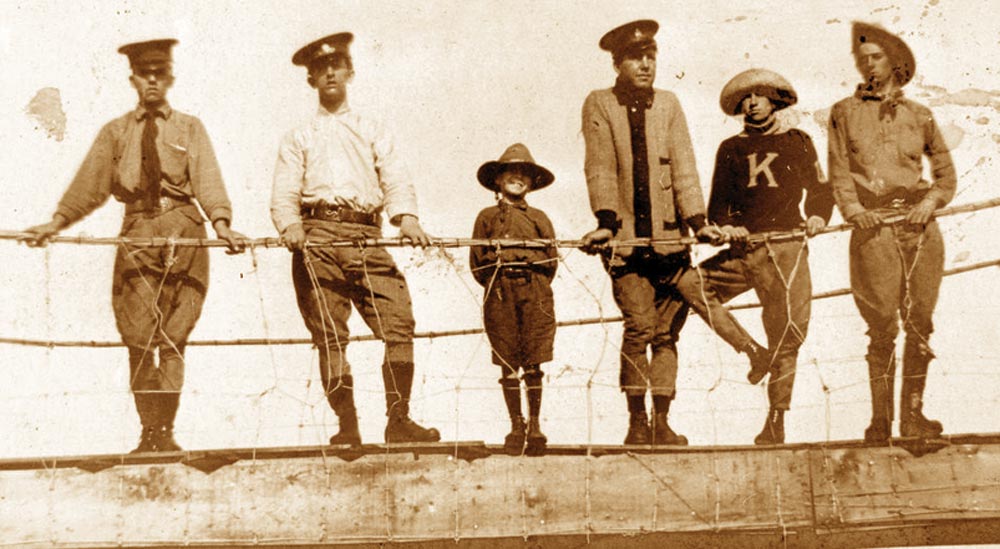
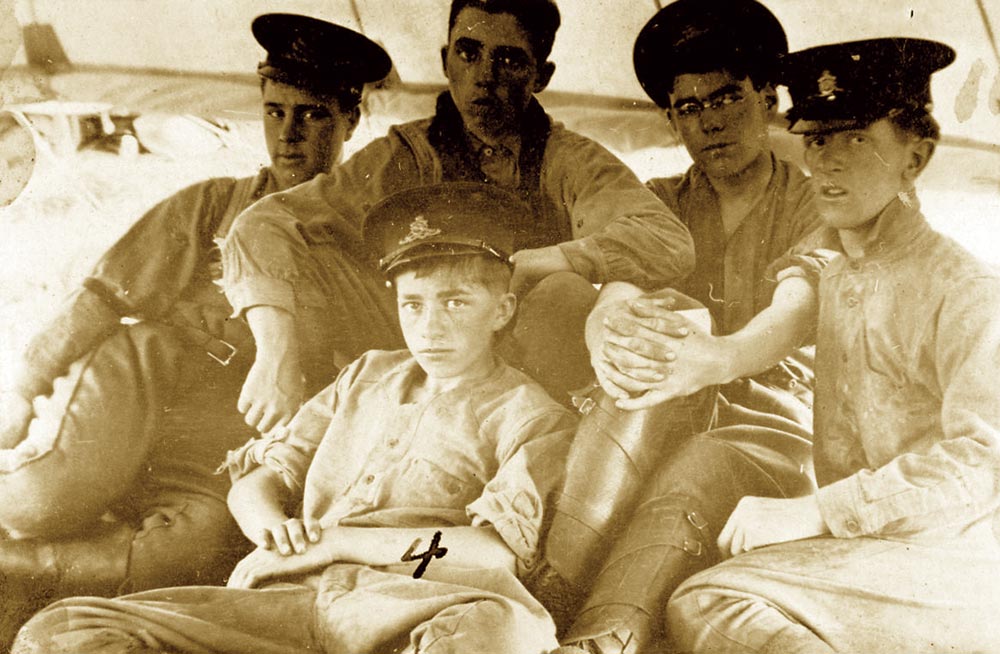
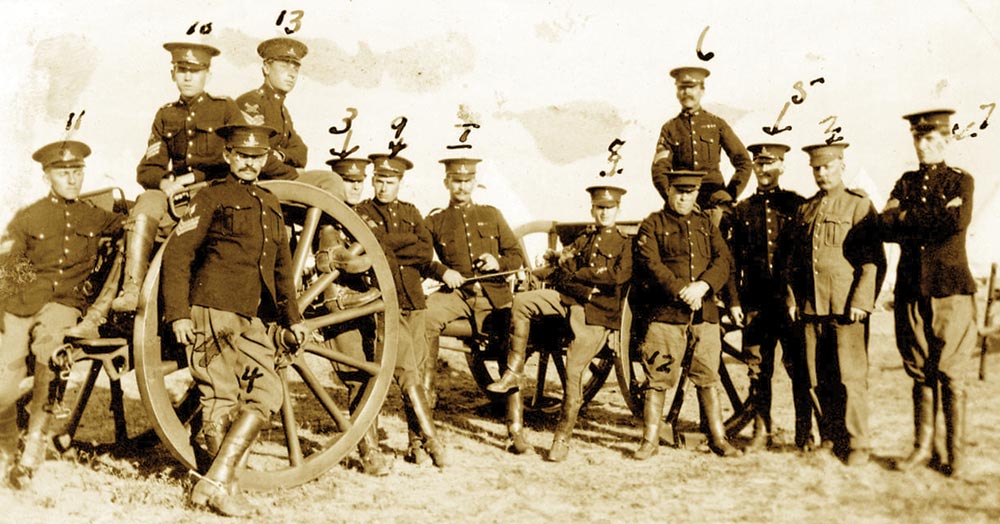
In the scrapbook, most of the photos depict the 13 Battery on summer training at Camp Sewell. Many of the images list the names of the soldiers from 1911 to 1914.
Before establishing Camp Sewell, militia units from Saskatchewan and Manitoba, known as District 10, participated in decentralized summer training camps.
This district had two infantry brigades, two cavalry brigades as well as independent artillery units. They held training locally near armouries on private property, and due to poor communication and standardized instruction, the militia lacked uniform training results.
In 1909, Commander of District 10, the famous Col Samuel Steele (CB, KCMG) located a suitable stretch of land to train the militia inside the Spruce Woods Forest Preserve.
However, the federal government did not permit them to train inside the forest preserve. Col Steele made arrangements with the Hudson Bay Company (HBC) to use land next to the Sewell train station and outside the forest preserve for military training purposes.
On June 21, 1910, the first troops arrived at Camp Sewell, and Col Steele supervised the training. The 13th Battery CFA was one of the first 10 units to participate in the centralized annual summer camps.
The first summer camp running 10 days included 1,472 officers and men, plus 1,042 horses.
On June 29, 1910, Gen Sir John French, the first Commanding Officer (CO) of A Bty from Kingston in 1871, inspected all soldiers at Camp Sewell.
The 10 units performed efficiently compared to past decentralized camps and developed a cohesive discipline.
Sgt Morrow’s scrapbook contains information about running the camps during the formative years. For instance, it includes photos and notes on gun drill, forgotten items, such as “tables and chairs for the tents. No supply of paper for purposes of keeping a tab on stores going out. Not enough lanterns.”
In 1911, the camp expanded to 2,912 men and 19 units, with the Base growing in size. In 1912, the layout became more formalized, and by 1913 more than 4,000 soldiers attended the camp.
In the summer of 1914, more than 6,600 mens and more than 3,500 horses participated.
In turn, the 13th Battery remained independent from any brigade until the outbreak of the First World War in August 1914.
During the Great War, the 13th Battery remained independent from any brigade until the outbreak of war in August 1914. During the First World War, the 13th Bty did not mobilize for overseas duty. Instead, some of the Gunners from the 13th joined other units which fought in the Canadian Expeditionary Force (CEF).
At the RCA Museum, staff are glad to showcase Sgt Morrow’s Camp Sewell scrapbook. It is worth archiving and preserving as a rich historical document which tells the story of Camp Sewell and the 13th Battery from 1911 to 1914.
During the war years, upwards of 40,000 men trained at Camp Hughes. In 1934, the camp closed, and Camp Shilo opened approximately 10 kilometres to the west which is now home to CFB Shilo.
Currently, Camp Hughes is a national historic site, and the 13th Battery is based in Portage la Prairie.
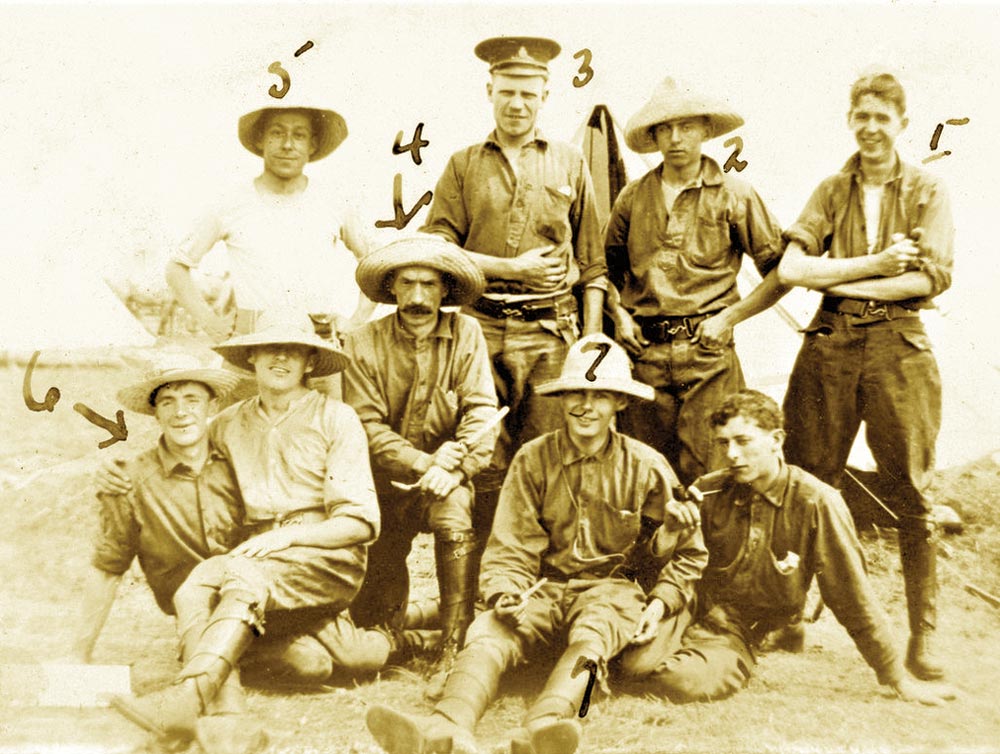
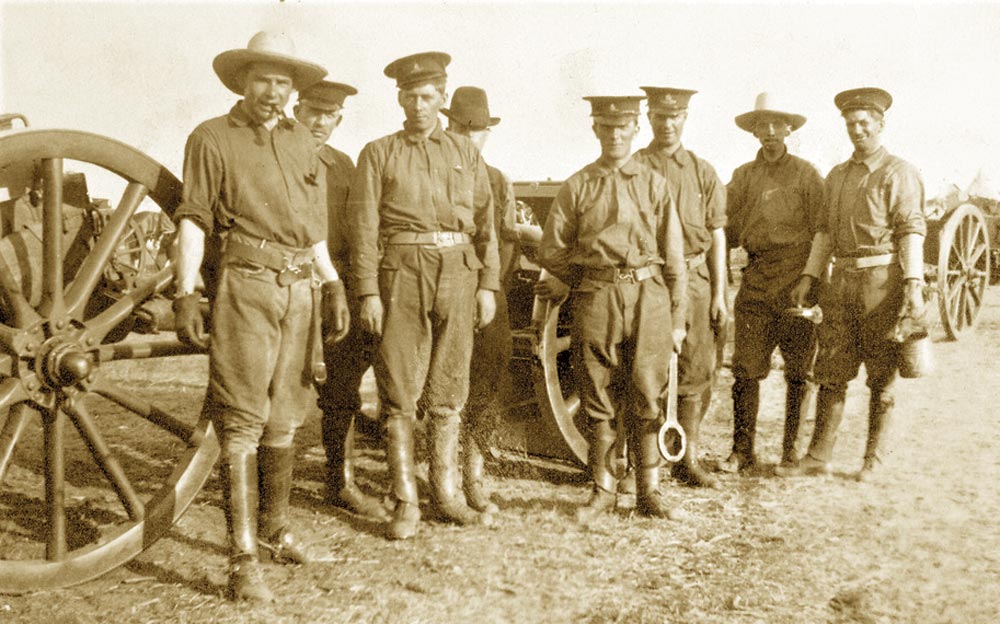
Soldiers with 13th Battery circa 1912 posed for a group photo. From this group, soldier No. 2, Minden Hall, was Killed in Action (KIA) at the Battle of Aubers Ridge in 1915. Photos Sgt George Morrow/RCA Museum archives
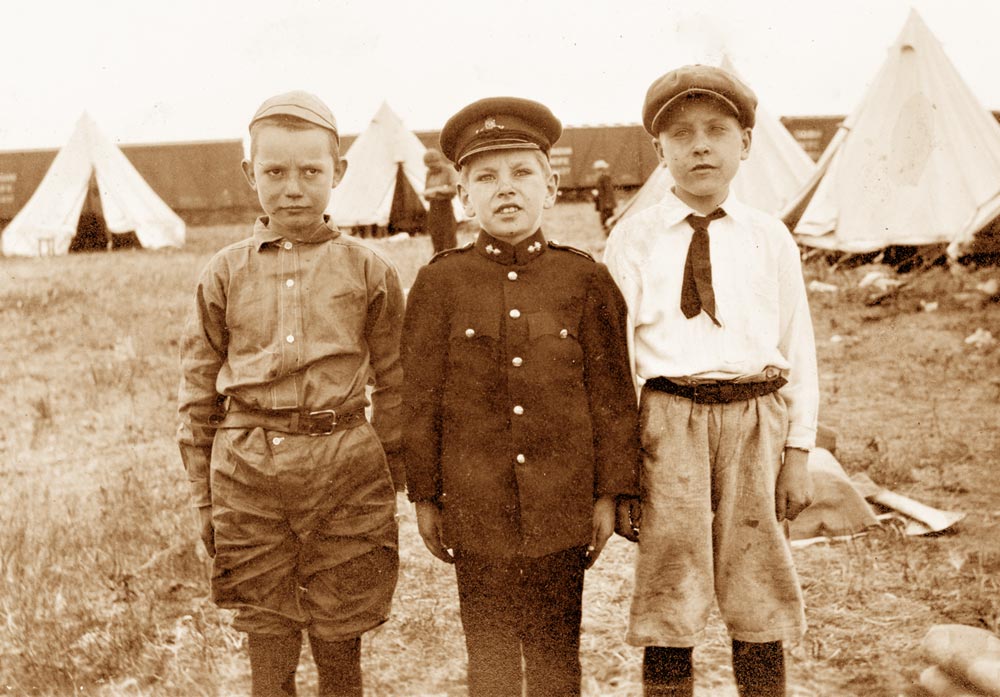
Sgt Morrow included a photo of the mascots from three units. They included Dexon, Grinday (middle) and Long. From 1871 to 1939, boys were notable militia unit mascots. They also had a dog and other animals such as deer and foxes as mascots.
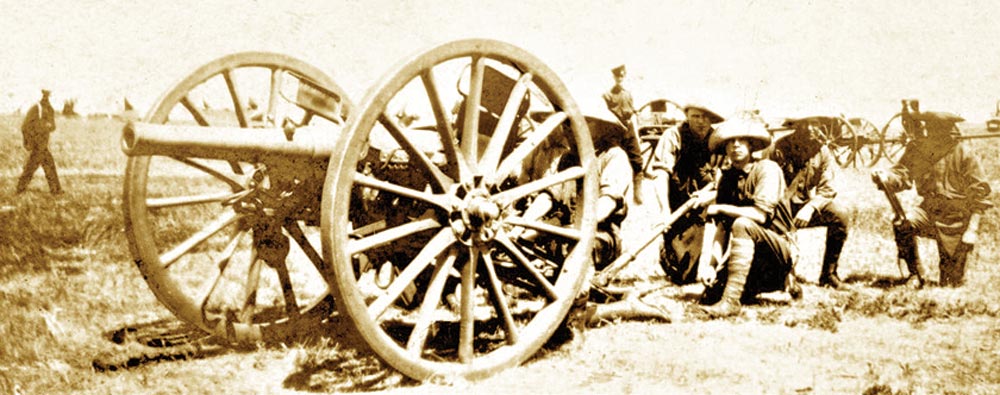
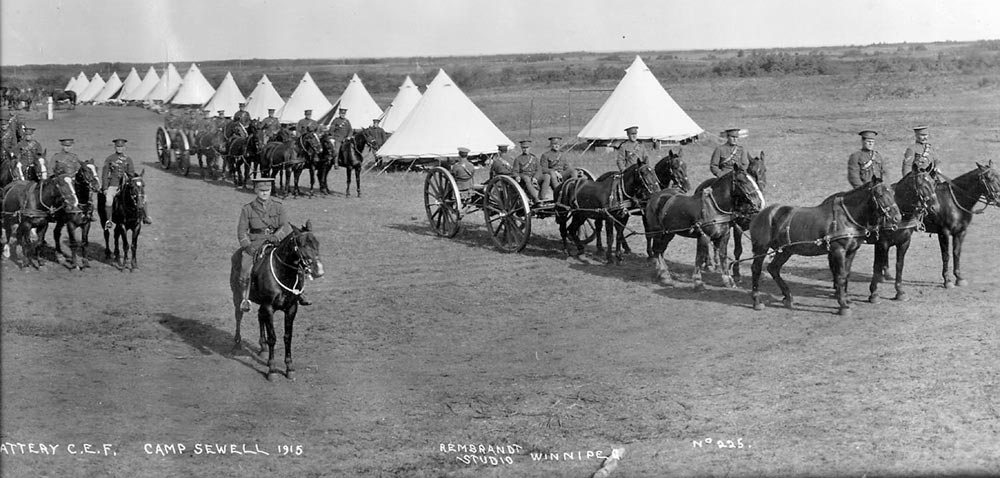
13th Battery Gunners at Camp Sewell with 18 Pounders dated 1913.
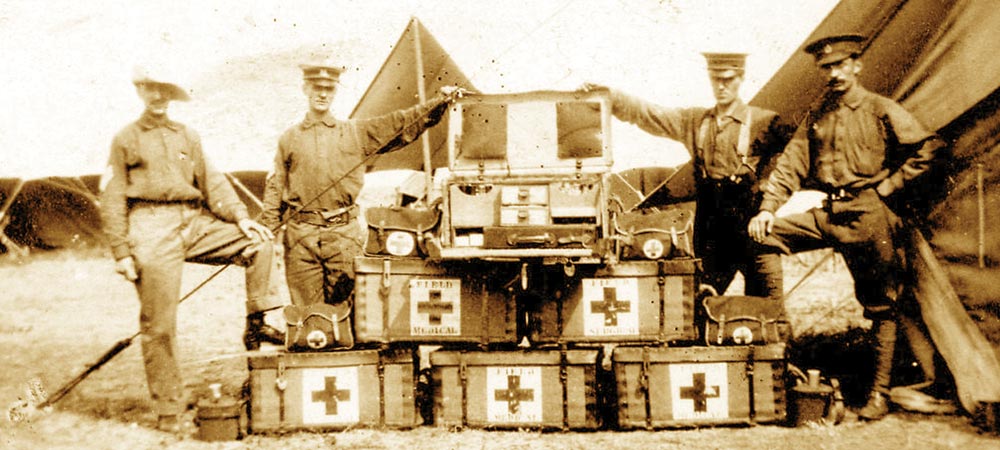
Medical supplies for Camp Sewell are collected for use in the adjacent medical tent.
A photo of Sewell Station, the entry point for every soldier at Camp Sewell circa 1912.
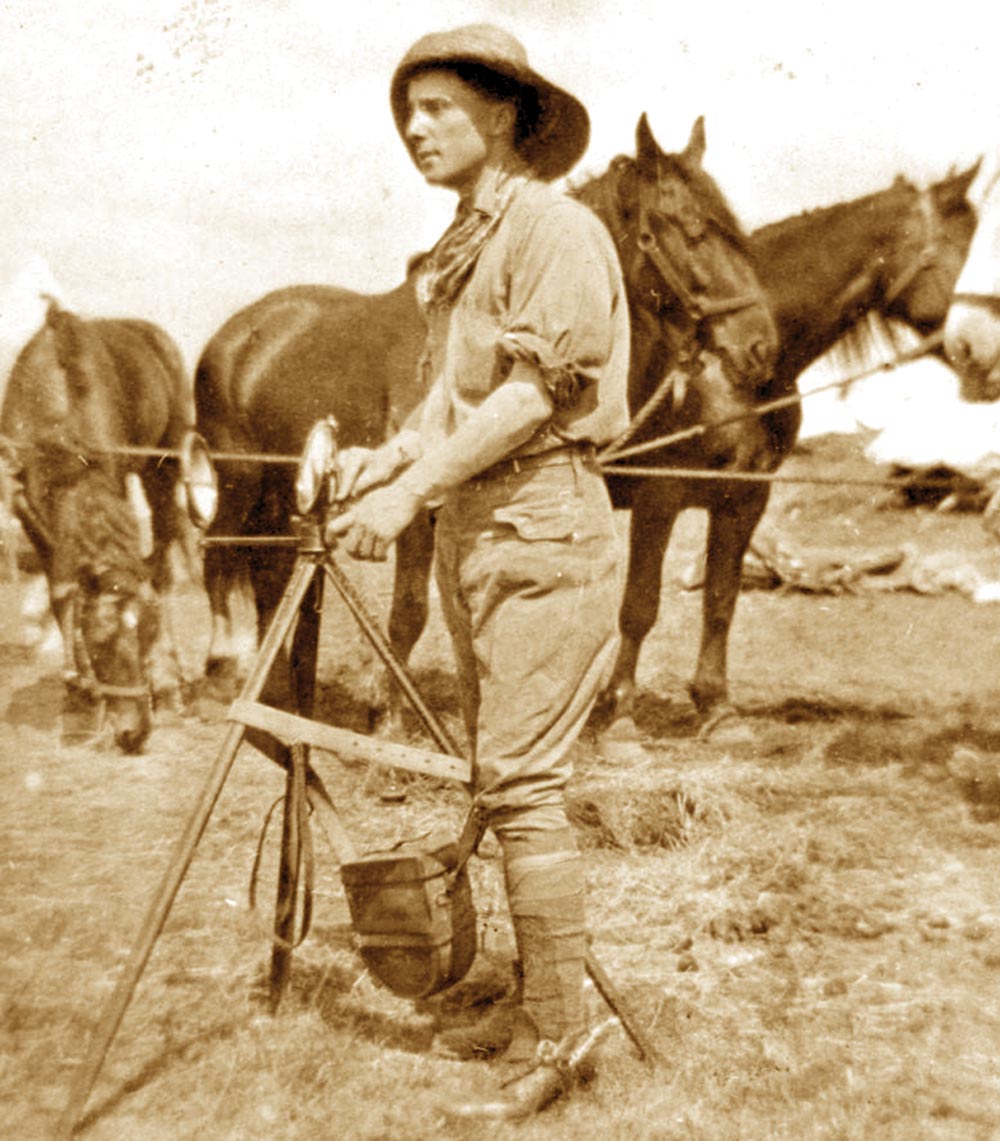
Sgt Morrow’s photo collection includes an exciting image of a Gunner operating a heliograph. At the RCA Museum, curators have a heliograph on display which looks the same as the one in the above photograph. The heliograph used a mirror and sunbeam to align the sights of the gun with the target, plus they used it for signalling over long distances.
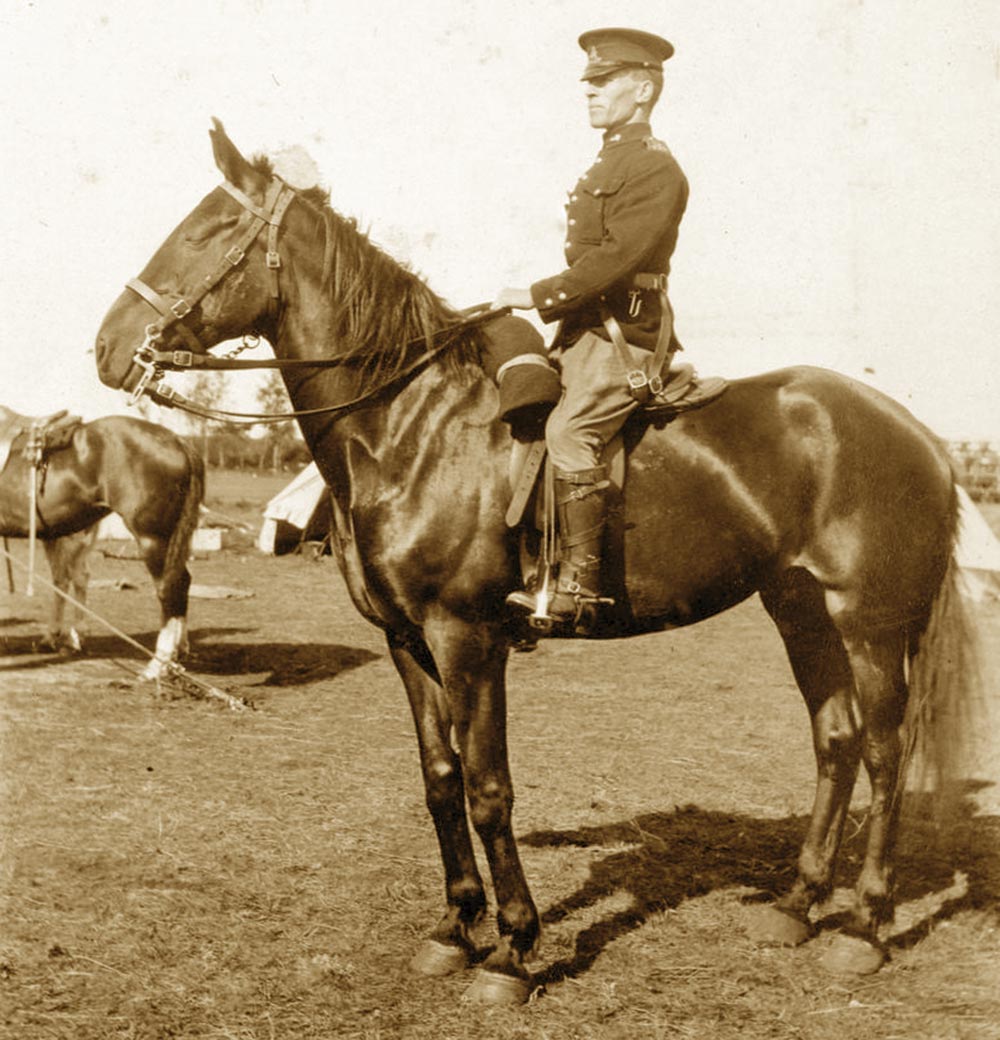
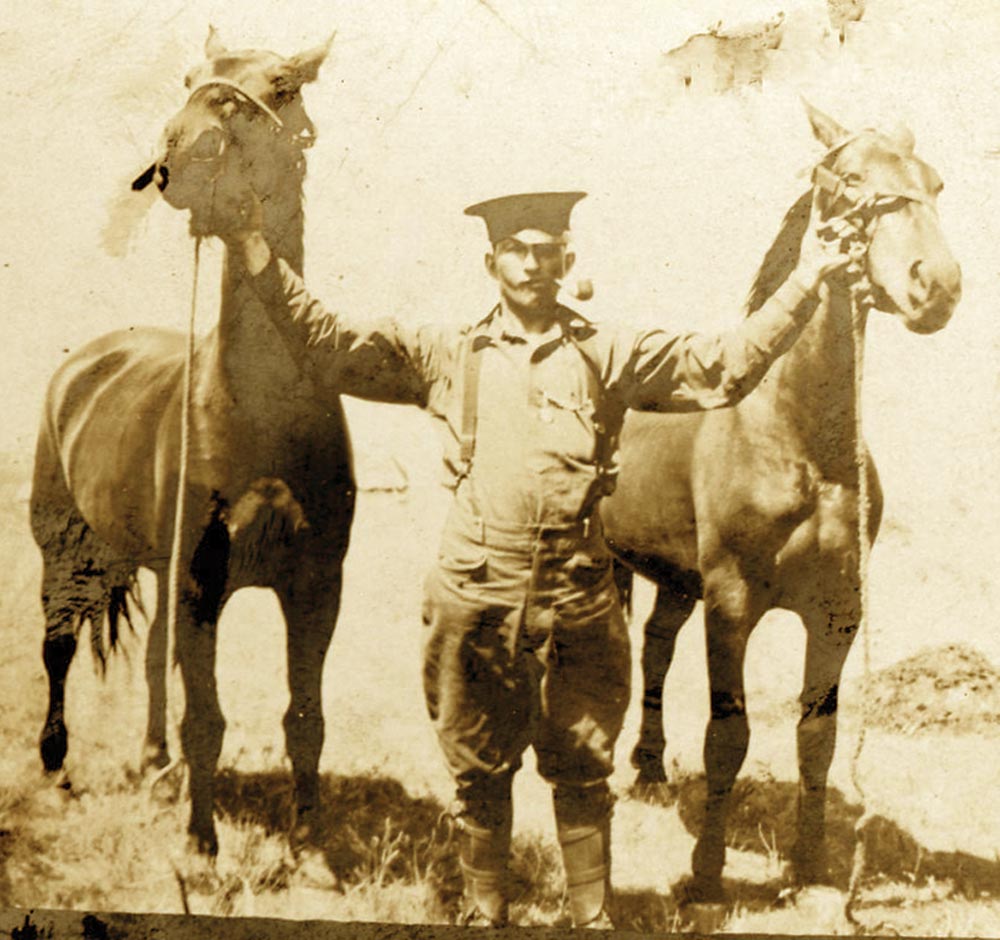
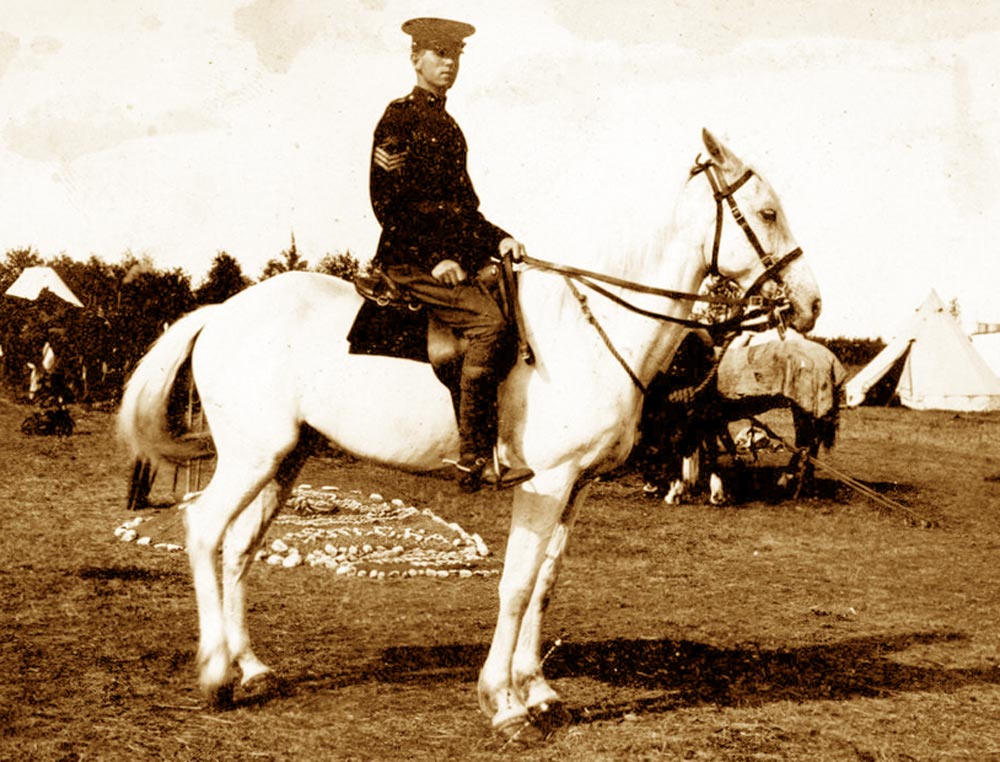
When Camp Sewell first opened up horses were a big part of the military training area.